Who should be allowed to get close to fossils in national parks? How do paleontologists change the places they study? In 2024, I defended my master’s thesis in history at the University of Alberta, focusing on these questions in the Burgess Shale. The project is titled “Making Space for Fossils: Power and Paleontology in Yoho National Park (1907 – 1988),” and you can read it for free here.
In March 2024, I presented a short talk about my research for the U of A’s 3 Minute Thesis competition. My talk was called “Millions of Specimens Are Ours For The Taking.”
What I wanted to learn
The Burgess Shale is a chain of fossil beds in British Columbia. They carry what paleontologist and science writer Stephen Jay Gould once called “the world’s most important animal fossils.” They’re an extraordinary record of underwater soft-bodied organisms from just after the Cambrian Explosion, around half a billion years ago. I’ve hiked up to the Burgess Shale sites in Yoho National Park more than once, and each time it’s felt sacred. Honestly I think it’s hard not be moved by stumbling over all that broken shale and holding a fossilized Anomalocaris claw or a trilobite. These are our ancient relatives, and they’re tumbling out of some of the most beautiful mountainsides in the world.
Before I started this project, I knew that paleontologists and geologists had shaped how the public understands these fossils. Scientists’ fieldwork and research has inspired museum exhibits, park brochures, scientific articles, and cartoon gifs. Getting close to the Burgess Shale itself in Yoho is tough, though. Members of the public need to book a fairly expensive spot on a guided hike, and aren’t allowed to take anything home. Yoho is part of traditional territory for Ktunaxa, Stoney, and Secwépemc First Nations, who’ve all been excluded from this landscape. I was curious whether paleontologists’ work had influenced these restrictions.
Under the supervision of Dr. Liza Piper at the U of A, I was able to investigate by digging into permit requests, receipts, letters, and newspaper articles. I visited archives in Banff and Winnipeg, and had help from archivists at the Smithsonian Institution in Washington, DC. I also travelled to Yoho and Kootenay National Parks and interviewed parks officials and paleontologists. Since the Burgess Shale was designated a UNESCO World Heritage Site in 1980, I decided to compare it to another fossil site on the World Heritage List by visiting the Joggins Fossil Cliffs in Nova Scotia.
What I learned
Basically, I found evidence that scientists have indeed shaped everybody’s use of the Burgess Shale fossil beds in Yoho through the arguments and tactics that they used to access, collect, and recognize the heritage value of the fossils.
My thesis was split into three case studies of moments in the twentieth century when paleontologists helped things in the Burgess Shale:
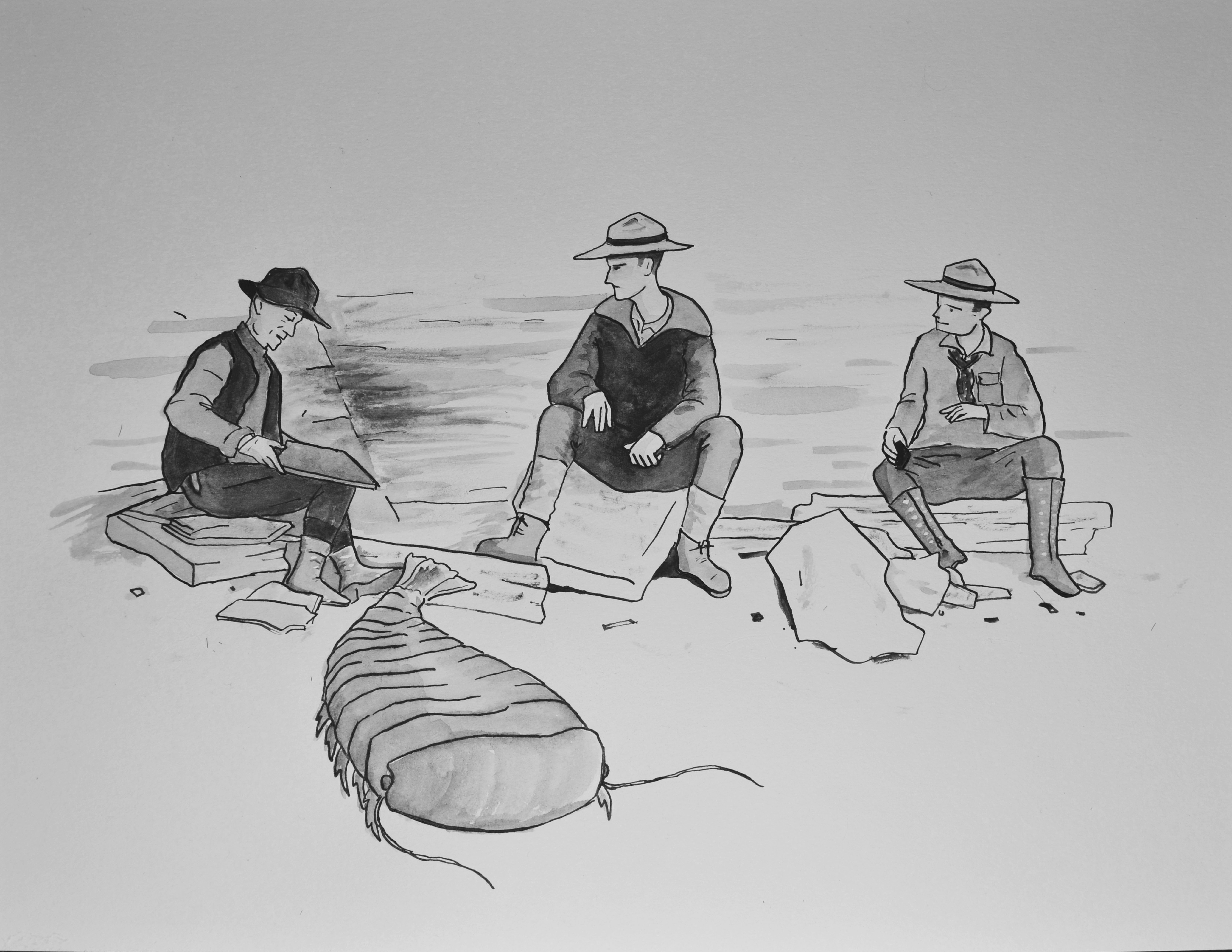
- I started with the first systematic scientific studies of the Burgess Shale, from 1907 – 1925. I looked at how Smithsonian Institution Secretary Charles Doolittle Walcott, family members like his wife Mary Vaux Walcott, and the rest of their team negotiated access to the Burgess Shale. I concluded that they got in by claiming space for Parks Canada and the Canadian Pacific Railway through species naming, by trading favours, and by being part of stuff that helped promote the mountain tourism industry, like a famous horseback riding club.
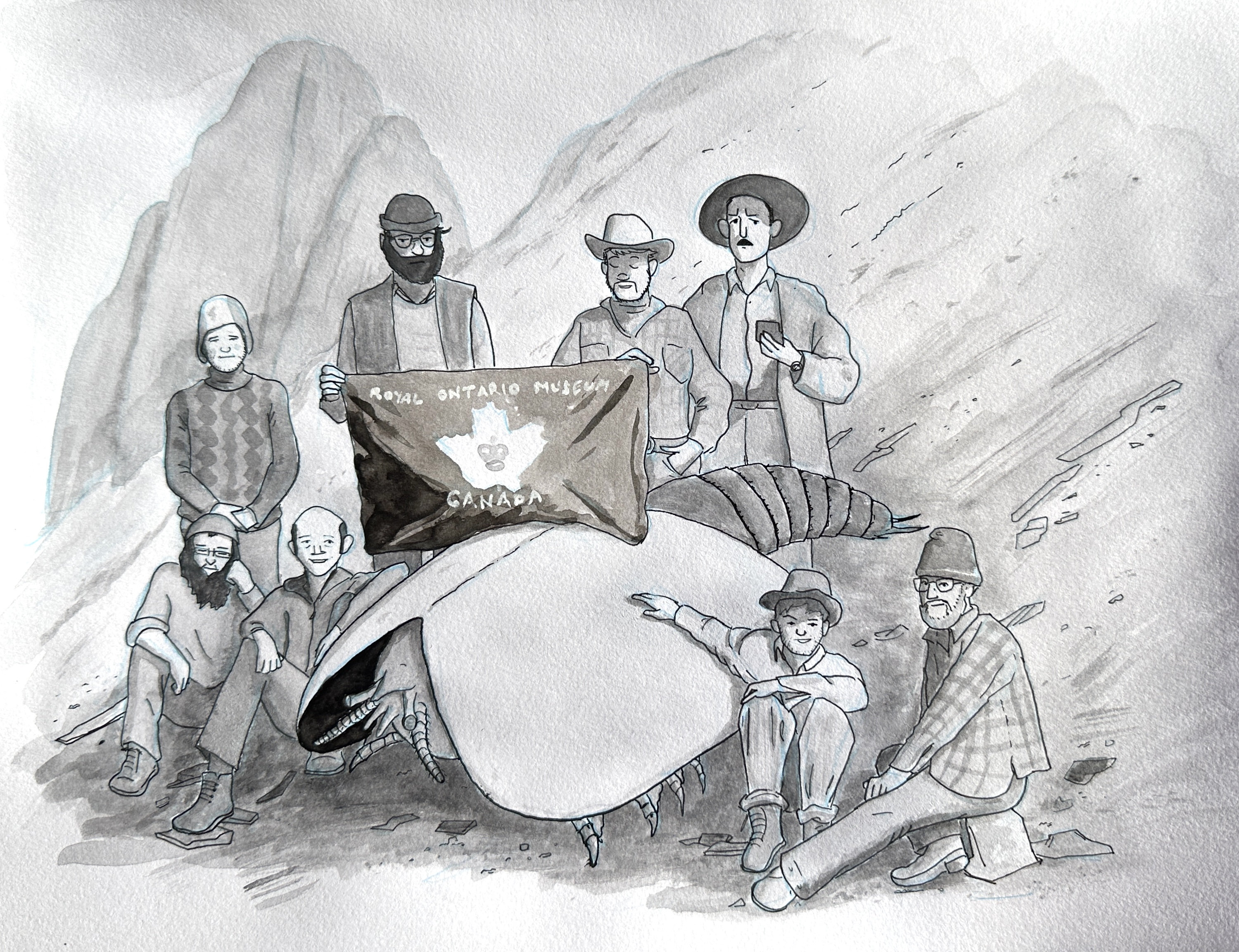
- Next, I focused on two permit requests that the Royal Ontario Museum made in the 1970s: one that was denied, and one that Parks Canada found impossible to refuse. I studied how curator and paleontologist Desmond Collins tapped into the language of nationalism and an endorsement from the Geological Survey of Canada to make his case.
- Lastly, I looked at the Burgess Shale’s nomination to the World Heritage list in 1979, and the consequences for park management up to 1988. Basically, I traced how today’s tight access restrictions spun out from this moment when the discourse of “heritage” and an upswing in tourist pressure collided with a parks agency that was becoming more and more concerned with wilderness preservation.
Through their research in the Burgess Shale, these generations of paleontologists expanded collective understanding of the evolution of life on Earth. At the same time, they helped Parks Canada and the Canadian Pacific Railway Company claim territory in the Rocky Mountains, increased Parks Canada’s perception of the fossils’ heritage value, and ultimately helped make the sites so popular with tourists that park managers saw strict access restrictions as the only way to protect the fossils.
Where I’ve shared my research
In 2023, I presented a talk at the AMPS Prague – Heritages conference, mostly about what happened when the Burgess Shale was added to the World Heritage List. A written version of that talk was published in the conference proceedings. It’s called “Paleontology and Wildness as Heritage Performance in the Burgess Shale.” You can read it for free here (scroll down to page 509).
Here’s a recording of that talk:
Support
My work was supported by a graduate research fellowship from Dr. Piper, a Dianne Samson Graduate Travel Award, a Walter H Johns Graduate Fellowship, a Canada Graduate Scholarship – Master’s from SSHRC, and an Eleanor Luxton Historical Foundation Graduate Fellowship.
 Chris Chang-Yen Phillips: Storyteller and People Weaver