Our Shareable Neighbourhood

We were looking for a horseshoe.
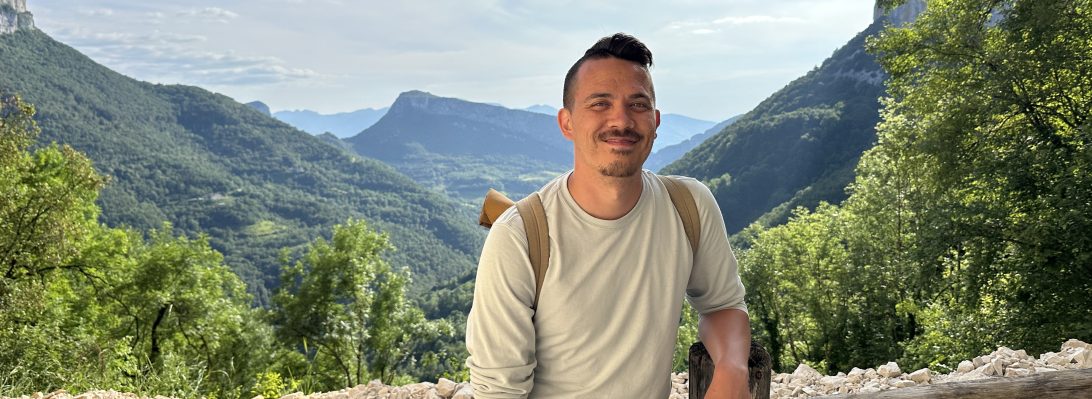
Some of the folks out at last weekend’s Backyard Gardens walk.

I’ve had some time on my hands this summer to brew a couple new projects, and I think one of them is ready to open up a bit to the world. It’s called Shareable Neighbourhood.

Well, it wasn’t always called Shareable Neighbourhood. Technically this is the first time that’s ever happened. Initially I just called it Neighbourhood Walk, and between the two names you kind of get the idea: monthly tours of our neighbourhood in Old Strathcona/Mill Creek, to let people share what they know about local history and nature.

It was an idea born out of Next Up, the leadership program I finished this year. I’d been trying to dream up ways to get people jazzed about the nitty-gritty of where we live. Partly because I’m intensely curious about how and why things got to be the way they are, and partly because I think when you know more about what’s in your soil and who’s lived on it, you’re more likely to stand up for it. And partly I hoped that if we were all learning and sharing this stuff together more often, we’d feel like we had a more natural community of people to turn to when we need help getting a group solar panel discount, or bringing people out to a city council meeting — you get the idea.

The twist is that while we’ve had three so far and it’s ready to be murmured about online, it’s also young and needs fresh minds. I’m really trying to encourage folks in the neighbourhood to feel confident leading their own walks, even if they don’t have a degree or letters behind their name to qualify them in the idea. That’s why last weekend’s theme was Backyard Gardens: six of us who aren’t professional horticulturalists got to show off what we know about making tomatoes and delphiniums look good. So I want to decentralize the planning behind this as soon as possible, and we also need theme ideas.

So if you’re reading this, and you live in and/or know a lot about Edmonton’s Old Strathcona and Mill Creekish areas, drop me a line. If you have a tour you’d like to lead, great! We’ve done Plants of the River Valley and History of Immigration to Edmonton so far, and I think this month we’re going to investigate the local railways. And if you’d like to get involved in organizing, I’d love to hear from you too. Shareable Neighbourhood also has a Facebook group if you want to join. It might need to become a likeable page at some point.

By the way, this project owes a lot to the Jane’s Walks. They’re these annual walks all around the world that work exactly this way. Locals lead walks around topics like how an industrial heart became an urban park. I didn’t even realize how inspired I was by Tim McCaskell’s tour of Toronto’s gay village until someone pointed it out to me.

Also the name change was inspired by the great podcast 99% Invisible, which has much the same mission to explore the unseen story behind everyday parts of our lives. They tell beauteous stories about everything from how a picture gets on a stamp, to why US currency is so ugly, to how a Walt Whitman poem became wrought in an iron fence in Brooklyn. Just listening to the host, Roman Mars, this week made me more pumped about getting people to show off these unseen stories right beneath the surface of where we live. I highly recommend you check it out.
Orbinski: Refuse government funding being used to quell dissent

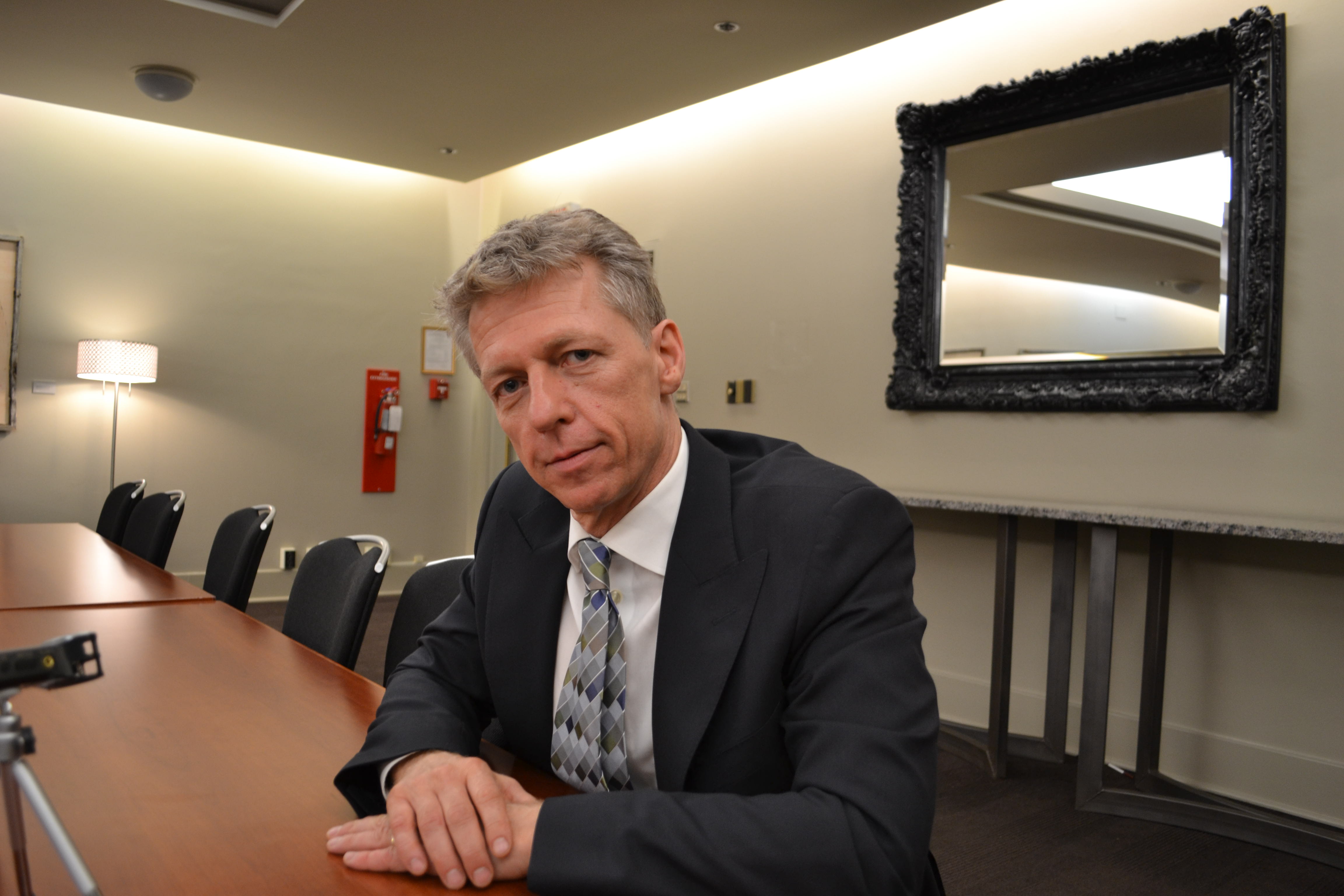
James Orbinski looks into the camera at a conference table in the Jubilee Auditorium
Dr James Orbinski spoke at the Jubilee Auditorium on June 13, 2012.

Last week, I had a chance to interview Dr James Orbinski for The CJSR Edition, our freshly-minted local news show. The former international head of Médecins Sans Frontières/ Doctors Without Borders was at the University of Alberta to accept an honourary degree. I met a few folks who saw his convocation speech, and they seemed kind of shell-shocked at how persuasively he had convinced them to do the hard thing and take some responsibility to make things better.

What struck me when we spoke was this comment about whether vocal civil society groups should risk taking federal funding or charitable status these days:

“The most important and powerful tool that any citizen has is his or her voice. The free and public expression using that voice is very much in my view a duty and a responsibility of citizenship. And if government — in this particular case, the Harper government — chooses to use tools of government, funding for example, in an effort to quell expression, and voice, and public engagement and public criticism, then citizens and citizen organizations should just simply refuse that funding.”

You can listen to the full interview below.

Test your webs

Last weekend was kind of like Christmas and my birthday all rolled into one, but with more pink glitter. Some friends I hadn’t seen for years came to town just in time for the Pride parade, and taught me about a fascinating idea: the need to test the invisible webs around you. This week, I needed to test one of mine, and it was harrowing but marvelous. Before I get to my little web though, let me explain what happened.

Dear friends Kathleen and Daltry smiling at the tiny concert

As the Edmonton Journal noted, there was plenty to celebrate at Pride this year, and I was happy to march with friends in Camp fYrefly, a leadership retreat for queer and allied youth. The creamy pink frosting on top of this cupcake, though, was finding out that my friends Kathleen and Daltry were both in town. We went to a tiny, intimate concert together at CKUA, and sat cross-legged on the floor together surrounded my sweet music.

Of course, what brought them back to Edmonton was not so sweet. A friend took his own life recently, and they’d come for his service.

Daltry’s mom was there too, and we were exchanging stories and proverbs by the punchbowl when the conversation turned to this friend, and what had led to his suicide. If only, she said, he could have seen the massive web of love that coalesced around him for that funeral, seen it while he was still alive. If only, she said, we had more chances to test those webs and see what they look like.

It was funny because someone else at the concert had just told me about another kind of important test. She was about to travel to Montreal, and I asked her if she planned on joining the protests there. She sighed, and said probably, but she was pretty anxious about getting arrested. A fine would basically ruin her finances at school for the next year, but she said the Quebec government’s new laws to restrain the movement made it hard for her to shut up.

It frustrated her because it seemed to confirm a theory of Nietzsche’s: that in Western democracies, we never really exercise our liberty because we trust that it’ll be there when we need it. That in a moment of crisis, the state would give us space to claim it. To her, the laws banning masked protests, unannounced gatherings of 50+ people, and fines in the tens of thousands of dollars for students group illegally organizing, smacked of a promise that was shown as false the moment it was tested.

What occurred to me was that the Pride parade is just such an event: an opportunity to test the webs of liberty and love that we hope are there. Twenty years ago, marching down the street declaring this kind of love here meant getting chased down the street and called faggots, and risking beatings from homophobic crowds. In most places in the world, it still does. This year, that test was honoured in Edmonton by the appearance of our province’s premier, and hours of rainbow flags and heavy mascara and dance music downtown.

Which brings me to my own harrowing test this week. After the glitter settled, I realized I had mixed up a deadline and had less than 24 hours to make a gigantic job application, with three sealed references, physically manifest itself across the country to be hand-delivered. It happened.

I’d like to say it was incredible, but it was really just implausible. So many brains working so hard to get these documents together, and printed out in another city? I felt like I was facing sub-District 12 odds of making it. But friends and old bosses pulled through in a way I was honestly astonished by. It was humbling.

It’s not often we get a chance to test those invisible webs. I am truly blessed to say that when I needed mine, it was there. To every one of you out there who’s part of it, thank you.