6 Thoughts About Speaking Up

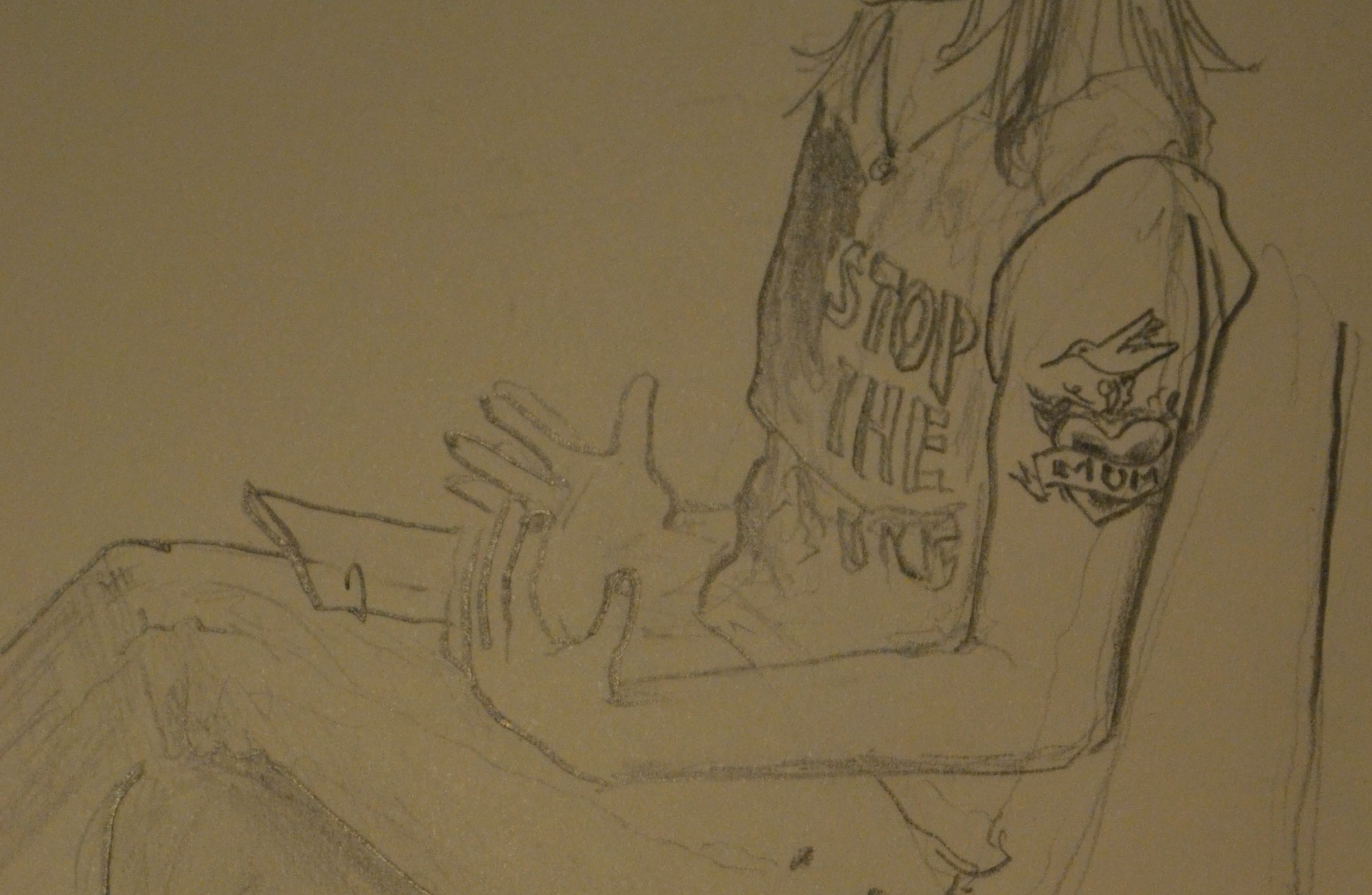
A sketch I made at Annie's Share-back.
This sketch of Annie Banks I made at her “share-back” event unintentionally captures her mixture of toughness and gentleness.

What if we speak?

It was a question some of my friends asked last winter, when the Idle No More movement lurched into the public eye: what if we, as people from white settler and immigrant communities, speak up and say we also want justice for Indigenous people in Canada? It became a book of poems and reflections that my friend and radio colleague Annie Banks contributed to, with the same name. More recently, she came to Edmonton to share stories about her efforts to learn when to be noisy, and when to be quiet.

I first met Annie at a documentary launch party that Terra Informa held last spring. She was new in town and eager to leap into a group of people telling stories about how environmental issues affected ordinary people, and what they were doing about it. We were all convinced by her gusto that she’d lived here for ages. She challenged us with new ideas, like her practice of naming the Indigenous territories where each of her stories took place.

Then she left us for San Francisco, on what I know she would want me to acknowledge are Ohlone and Chochenyo territories. She spent the early part of this year in a program called the Anne Braden Anti-Racist Training for White Social Justice Activists, and wrestled with some hard questions about herself and her work that I think are worth sharing.
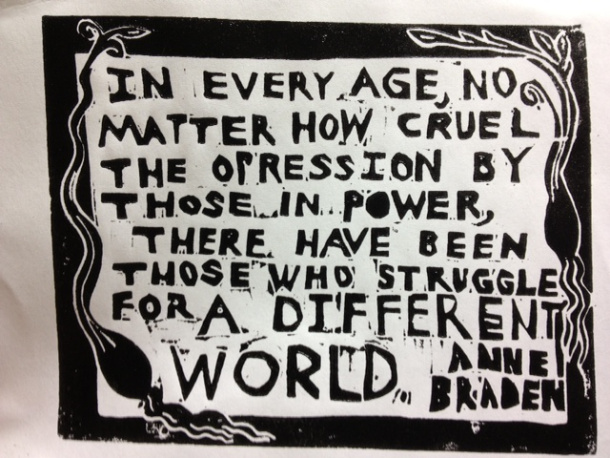
A linocut of Annie's.
A linocut of Annie’s.

They’re relevant for many contexts, but especially pertinent because we still live in a culture where white people have a disproportionate share of power: where Aboriginal and black people make up more than their fair share of people in prison, Indigenous people all around the country are fighting to maintain control over what happens on their land, and our federal government’s campaign to demonize refugees in need of health care is likely to convince more of us that immigrants and refugees are “enemies at the gate.” These are problems that will need all of our participation to resolve.

Here are some of the things I’ve gleaned from Annie:

1. Lean in. Listen closely, and see where people are at before lecturing.

2. Make your space affirming. If you’re in a group of people organizing something important together, make it a joyful and enjoyable experience. She said this one was hard for her, because she’d always felt like heavy subjects demanded a sombre atmosphere.

3. Be patient. This is something of a rhyme to the title of her blog, Noisy and Quiet. For her, being an ally in a movement led by traditionally marginalized people means giving up some of the assumed power in that environment, and recognizing the pace your allies need to follow. Annie interned with the California Coalition for Women Prisoners, and it she said this was most clearly demonstrated when the group sometimes needed to wait for letters to go back and forth to people inside, which could take months.

4. Recognize that self-love makes a strong foundation for your work. I know this one was tough for her too – to hold all the knowledge about racism today in one hand, and still have some grounding and love for her white roots.

5. Don’t step back so far you disappear. Annie told a funny story about overcoming her feelings of anxiety about taking up too much power and space in a movement, as a white person. Someone came up to her, apparently, and reminded her that the group still needed her to be useful and get dirty. To do that, she said, she needed to acknowledge that sometimes she’d make mistakes, and mess up, and that’s okay.

6. Think about how to leverage your privileges for others. Annie spent a long time, even when she arrived in San Francisco, feeling uncomfortable about being able to attend this program all the way in California when others didn’t have her privileges: family members to help her pay for it, US citizenship that allowed her to get a job, and a friend to literally drive her all the way there. But in the end, she was persuaded that she could take her experiences and knowledge from the Anne Braden program, and share it back to people back home.

Which is what brought her to the Edmonton “share-back” that I attended, and which makes me so proud to be her friend and occasional student. Thanks, Annie.
Risky Business

If you’ve taken a chance on a new play at Edmonton’s Fringe Festival, you know the anxious thrill of sitting in your seat, wondering if it’s going to be the best $12 you ever spent, or the most tedious hour of interpretive dance you’ve ever watched. The Fringe detonates around the city for the next eleven days, and it’s got me thinking about the tension between taking a risk and finding comfort in a sure thing. This week, Fringe Theatre Adventures Executive Director Jill Roszell spoke at an Aprikat-doused Rotary Club event at the Artisan Resto Café on Whyte, where I had a chance to bounce some ideas off her.

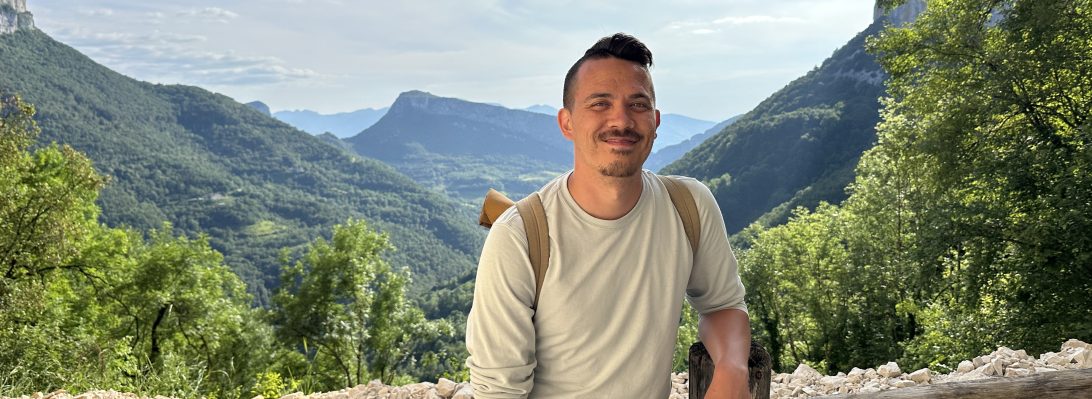
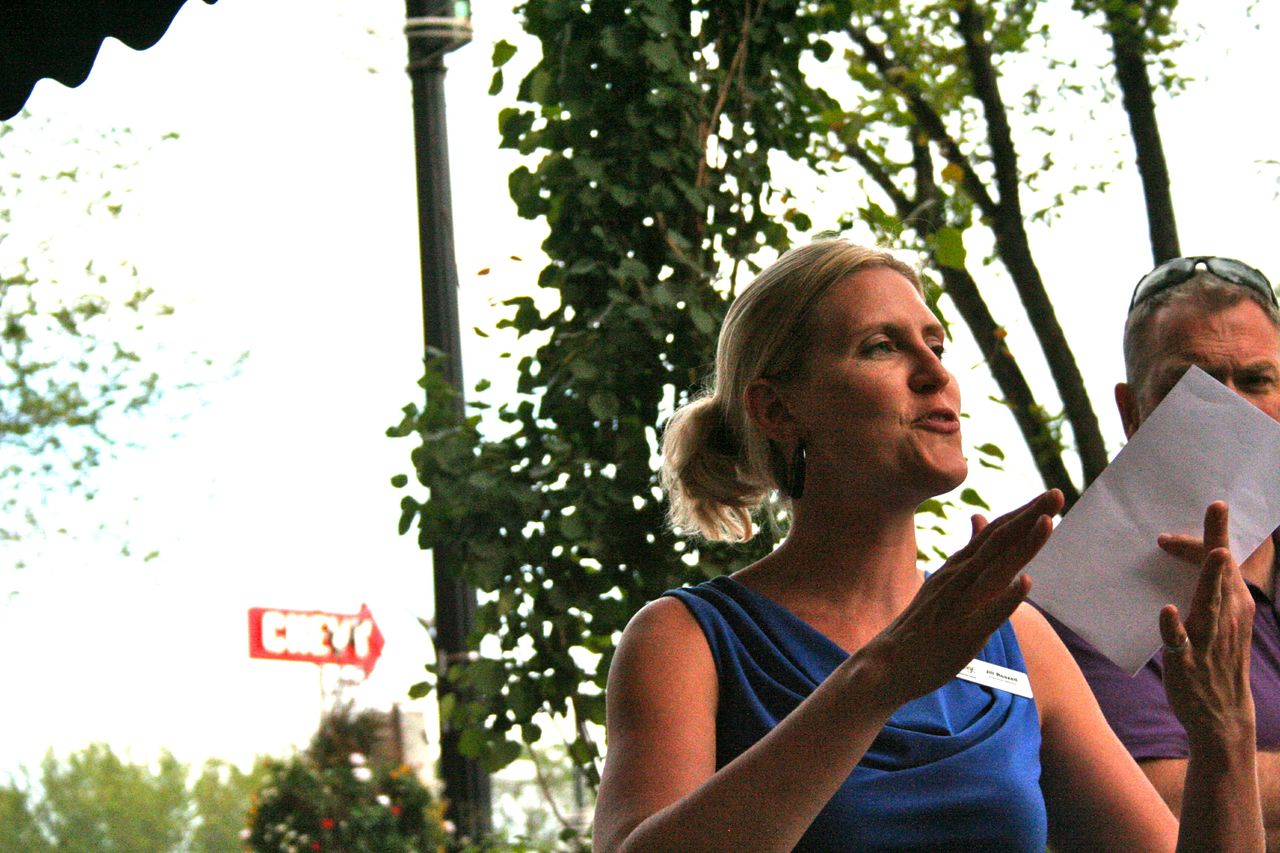
Jill raises her hands in front of a tree-lined Whyte Avenue backdrop.
Fringe Theatre Adventures Executive Director Jill Roszell sharing some stories at the Artisan Resto-Café on Whyte Ave. Photo credit: Idris Fashan

Jill has one of those horizon-wide, full-toothed smiles that says, “I love what I do.” I asked her what she anticipated would be fascinating, and this was her un-prompted answer:

“I am very interested in the zombie tag, I’m not gonna lie.”

That would be An Apocalypse Survival Guide: Undead or Alive?, going up in the TACOS space that Punctuate! curates. Un-prompted!

You might have heard of how the green onion cake-dappled, fire-juggling festival has evolved over the last few years. Since the Fringe’s inception, crowds of artists have entered their names into a lottery, hoping to be randomly selected to perform at one of the festival’s venues. That means professional performers have the same chance to get a spot as someone who’s just got a leotard and an idea. In recent years, the festival has begun allowing shows to open at BYOVs – Bring Your Own Venues. Those venues, like TACOS, can select shows that they think will be intriguing, electrifying, or just guaranteed crowd-pleasers.

The number of shows this year is so gigantic that Jill laughed about the size of the program guide. If they have to add one more page, she said, they’ll have to re-think the staples in the middle and move to a whole new binding size. This year, they’re also adding a family-friendly hangout space for those who don’t want to trundle into the beer garden, and experimenting with activities in an iconic gazebo.

What’s the most audacious thing they’ve tried in the last few years, though?

“The expansion of the BYOVs,” said Jill. “I don’t think the previous festival administrators could have anticipated the popularity of the BYOVs.”

She said she doesn’t think they fully know yet how it’s changed the character of the Fringe, but it has definitely changed the way veteran performers are thinking about the festival.

“Local companies that know that they have access to venues,” she explained, “are not putting their names in the lottery as much. So it’s opening up that local lottery for people that don’t have access to venues. We’re getting different groups come through the lottery system. And we’re also seeing a lot of national and international touring artists start to embrace the BYOVs because they know they can get a spot. Places like Edinburgh and Adelaide, the bigger Fringes than Edmonton… they do all BYOV, so it’s all based on venue.”

What’s the concern, if it’s bringing us zombie tag?

“In some ways that’s good,” said Roszell, “in some ways that’s taking away from the spirit of risk and chance. The Varscona [Theatre], there was a huge controvery a number of years ago when they decided to become a BYOV and not a festival venue anymore. At the end of the day, the decision was made that because companies like Teatro la Quindicina grew up in the Fringe, you know… they got tired of playing the lottery game.”

Being able to choose the programming at their own venue, she said, lets established companies like them guarantee opportunities to their artists who want to grow in a new direction, like actors who want to write plays for the first time. More to the point, she added, festivalgoers come back every year expecting to see signature artists like Stewart Lemoine’s work, or Guys in Disguise.

BYOV-hosted shows make up about half of the festival this year. For now, said Jill, it’s not obvious that their hyper-expansion is threatening that heady anticipation you can get by buying a ticket to a show you’ve never heard of before. Their strategy for managing the tension between those forces at the moment is to keep the number of BYOV and lottery shows the same.

What does she want to experiment with next?

“I really want to do some more work with found space,” Jill mused. In other cities, she’s seen actors hang from trees, or perform their whole show outside in a glass cube.

Too many spaces with chairs right now, I asked? Pretty much, she agreed. She beamed as she leaned over with her next idea. You know the glassed-in outdoor washroom everybody’s talking about on Whyte Ave?

“I want to commission a show to do in that bathroom. You could do an interpretive dance in there.”

Enough Already

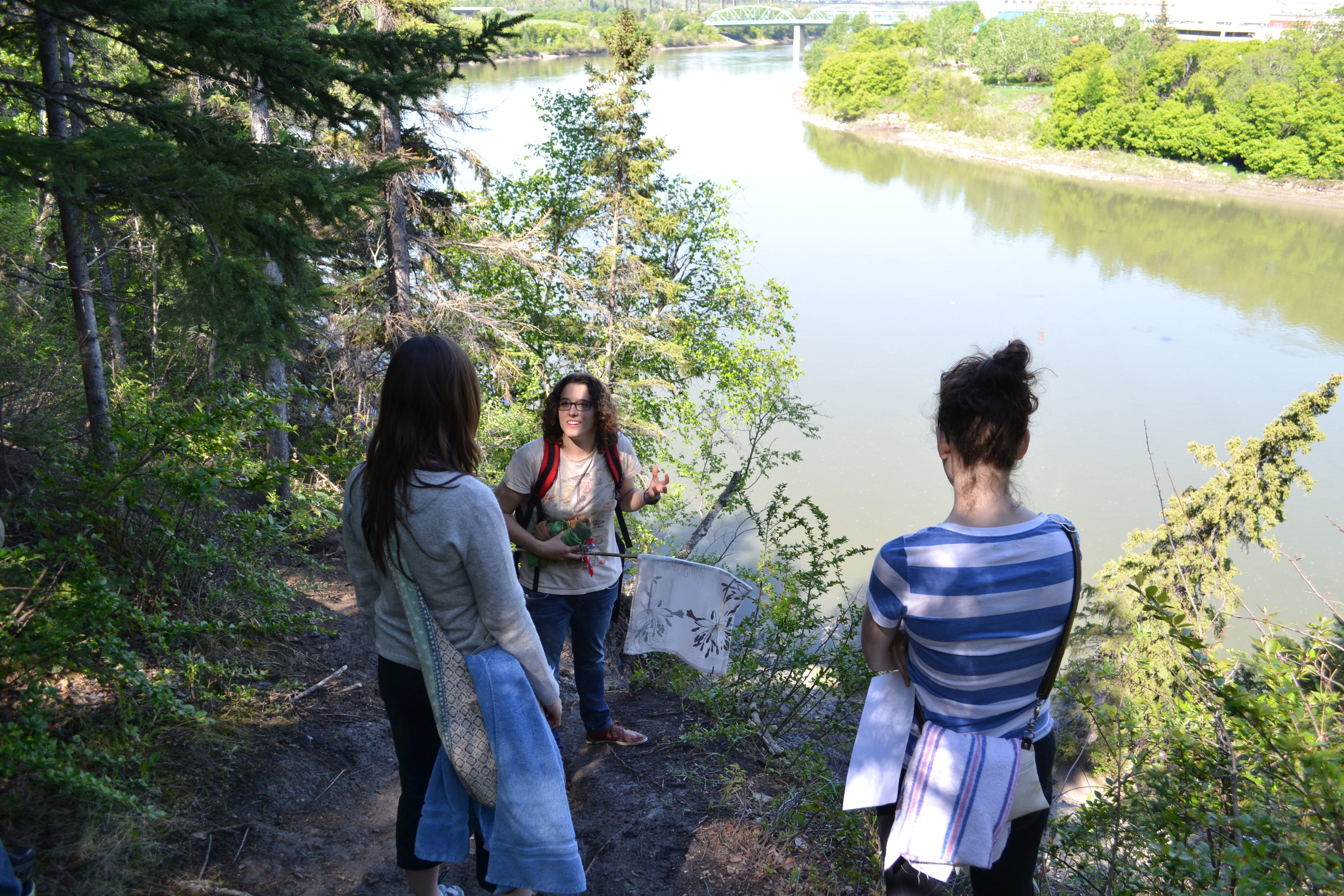
One of my favourite pictures from the whole Shareables enterprise, from last summer's walk on Plants in the River Valley.
One of my favourite pictures from the whole Shareables enterprise, from last summer’s walk on Plants in the River Valley.

Last summer, when I went door to door looking for people who wanted to show off their backyard garden for Shareable Neighbourhood, and everything they knew about growing plants, one person whose door I knocked left a thought with me in return. She was asking about the motivations and mission behind Shareable Neighbourhood, and with her I played up how much I wanted to give neighbours an opportunity to get to know each other better, and feel a little more tightly woven — like they had people around them they could rely on.

She seemed dismissive of the idea. Old Strathcona and Mill Creek already have lots of community groups, she said. Don’t you think there are enough already?

Since then, I’ve kept worrying that maybe she’s right. Especially on days like the Urban Birds walk or the Death in the River Valley walk, when only a handful of us showed up. But thinking about how Punctuate! player Adam Cope recently took his own life, and a classmate named Alex before that, and Ross Moroz before that, have convinced me that she’s wrong.

I feel like Holden Caulfield at the end of Catcher in the Rye. How he sees himself in that field, watching all those kids falling, and can’t help but feel like he’s got to catch them all. I knew Adam. I knew Ross. I didn’t know how to save them — didn’t even know they needed saving — but I feel like I understand their despair. Like life is too painful, too unbearable, and it’s relentless. It never stops. And it can feel like you don’t have any options, any ways to make it better, or make the pain go away. I’ve felt that pain before, and it’s only because I felt how strong the web of care was around me that I clambered out.

How could anyone look at despair like that and think, “You know what? We’ve got enough circles of care in our community.”

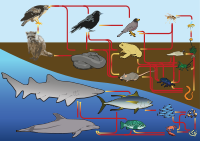
A terrestrial and aquatic food web
I’m really curious about the relationship between the raccoon and the snake. Like, really? (Photo: LadyofHats)

In ecology, we recognize that systems are more resilient when they’re more complex, with greater interconnections. Simplified ecosystems, with only one genetic variety of a plant or too few pollinators, are more vulnerable. If anything happens to one component, the whole thing could collapse.

In human communities, the same thing is true. Organizations are susceptible to collapse if too few people are doing all the work. If one gets sick, it can throw the whole organization into crisis, or more often, people will make themselves sick by taking on more than they can really handle.

Shareable Neighbourhood is partly an attempt to make our neighbourhood more resilient by showing people that they have something to offer, and others appreciate and recognize it. Recognizing that worth in one another can light up both individuals, and nurture their care and compassion for one another. Maybe, one day, when one needs help, they’ll think of the other and be less shy to ask.

With this latest walk happening tonight, we really wanted to get some of the kids at the Old Strathcona Youth Society involved, because the theme is public art, and they are a perfect model of people who have expertise that’s not accessed or recognized enough. They make street art! And when they think about the controversies around it, they have a perspective that middle class people down the street don’t. I told Jaya, one of the staff there, that I was really excited that they were participating. Here’s what she wrote back:

Doing small things with great love and compassion to create compassionate communities goes a long way!

I sure hope so.