The land where my grandparents used to live in their motorhome, underwater in June.
This morning I missed my bus, so I stopped inside the cafe on the corner to escape the torrents of rain and warm up a bit. It was the kind of rain that pours down your face so fast it stings your eyes, and makes you jump to the inside of the sidewalk every time a truck goes past so you don’t get engulfed in its puddle-waves.
My neighbours Val and Steve were there too, and as the three of us looked outside, we got to talking about how crazy the rain has been in Edmonton this month. We’re not low enough to experience what Calgary got, said Val, but we might see flooding yet.
It reminded me of something that got left out of a radio story I did on the Calgary flood recently, a quote that really sums up something I find hard to understand about these kind of freak, terrible events.
I interviewed Shawn Marshall, a climatologist who works at the University of Calgary but lives down the highway in Canmore, and got stuck in Calgary because the roads washed away. And when something like that happens, and you’re thinking about climate change, you can’t help but ask: is this it? Is this horrible event, that forced thousands of people like my grandpa out of their homes, that’s going to draw permanent red lines around some flood plains, is this what climate change looks like?
The thing he said, the thing I wished my co-producer and I had room to leave in the story, is that we should think about it upside-down, basically. Rather than standing out in our hip waders and asking the water, “Is this it?”, we should look at the planet and ask, “What’s likely to happen these days?” And our atmosphere, explained Shawn, is telling us it’s getting warmer and wetter. Which means more rain and snow. And more floods.
Something to think about as I trundled out in my rainboots today.
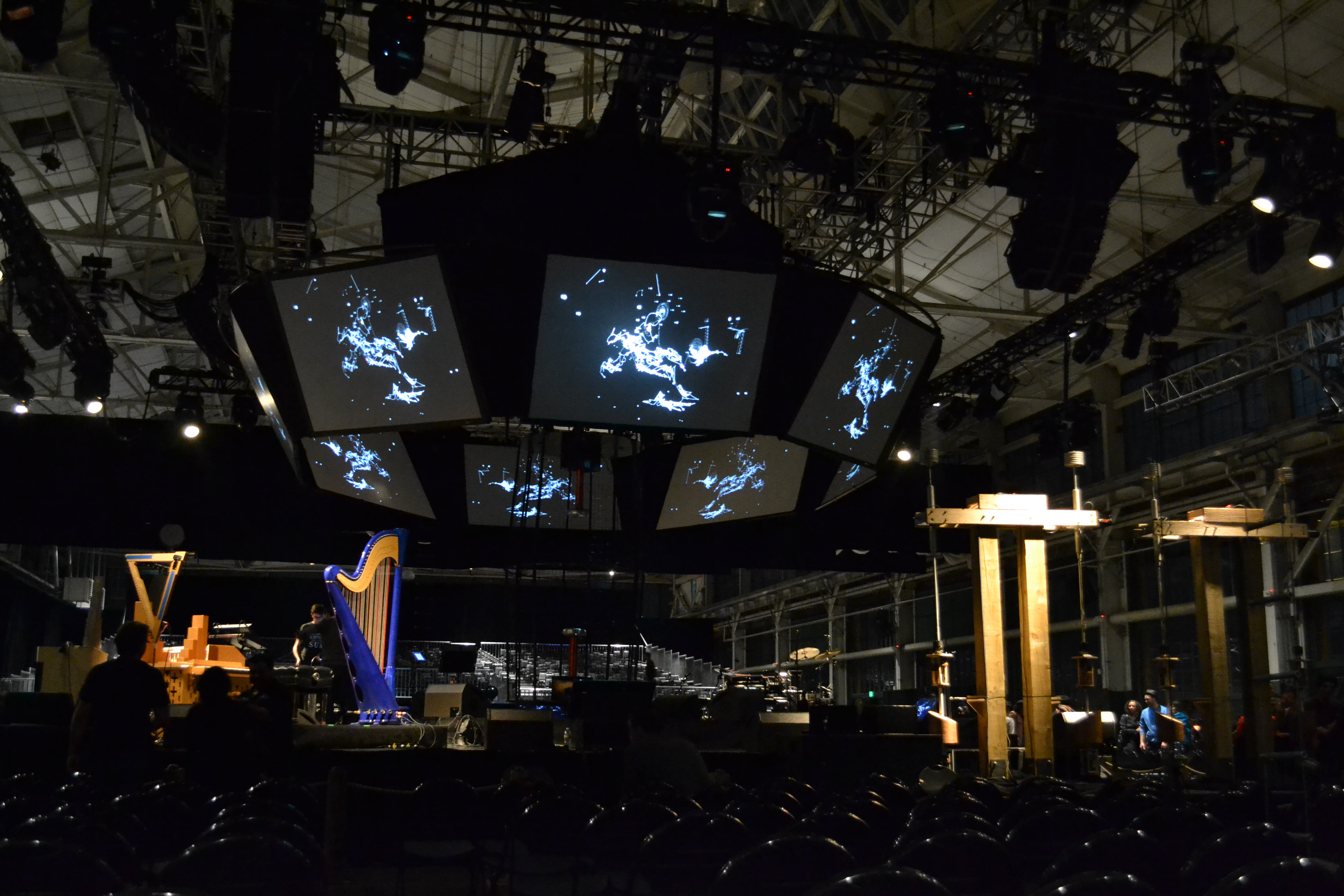
Seeing Björk perform live in San Francisco with this swirl of screens and instruments around her was a treat for the ears and the soul.
Last week, I got to see one of my idols in action in San Francisco, and every splash of electricity, every heart-thumping wail, helped affirm the creative and spiritual path I’ve been drawing up for myself. Many people have asked what it was like seeing Icelandic singer Björk perform live for the first time, so I’ve tried to distill some of the lessons I learned here. First, let me set the scene for you.
Björk has always had murmurs of volcanoes and snow-goddesses in her music, but her latest project, Biophilia, explicitly invites you to think about our place in nature as sort of a midway point between the cosmic and the microscopic. I’ve written before about the iPad/iPhone apps she created for Biophilia. It was something different entirely to see her perform the songs beside a harbour, with the almost-full moon rising behind her.
The obligatory fan wearing a swan dress outside.
It seemed right for my boyfriend and I to dress up a bit whimsically, considering she’s performed in a swan dress and an outfit made of tinkly red fingers of glass. We didn’t realize we’d be so out of place in the city where she was performing, though. Across the Bay from San Francisco itself, she’d set up camp in an old wartime assembly plant in Richmond, refurbished into a glassed-in pavillion overlooking the harbour. I’m glad we wandered around, because it helped us put the evening in context. Richmond is palpably poorer, more latino, and more black, than San Francisco. And while the pavillion was breath-taking to be inside, wandering drew my attention to the more sinister side-effects of the refineries and factories in today’s Richmond.
Meanwhile, we stood in line with digital artists, punk kids from Sacramento, and yuppie parents from Oakland. Once inside, we found a spot standing ten metres away from a small stage surrounded on all sides by fellow eccentrics, creators, and dreamers. The lights dimmed, a ring of screens lit up with videos introduced by nature documentarian David Attenborough, and a cage of tesla coils descended from the ceiling to join the enormous pendulum harps, drums, and pipe organ on stage. That’s when Björk herself came out with ruby platform shoes, a frizzed-out blue and orange wig, and a choir in tow to teach us this:
Celebrate eccentricity
Songs about lunar cycles, and videos of starfish embracing each other, are not for everyone. Björk’s work kind of embraces her fearless, outlandish tendencies, though. As a consequence, she accomplishes things that a less daring artist would never get close to. What could I accomplish if I was less afraid of what people would say, or how they’d react?
Don’t give up on the impossible
Like a giant child’s legs dangling under a desk, the pendulum harp she played was an invention from her own mind. It is literally four enormous wooden pendulums, and when before each one falls she can rotate a circular harp wrapped around its base to pluck a different note. It perfectly suits a song about gravity and Earth’s place in the solar system. She dreamed it up this incredibly complex thing,approached robotics experts and programmers, and gave the world something that never existed before. What else could we make if we looked at our audacious dreams and said, “Yes please, let’s create that”?
Comfort is an illusion
Björk is almost 50* now, but she’s still creatively peaking. Sometimes her experiments don’t work, but she’s not afraid to skip most of the hits and habits that made her famous, to make space to try something new. I think a lot of artists get into a rut of continually reproducing their old stuff to make their fans happy. All the songs about viruses, DNA, and cosmic origins on Biophilia showed me that it’s often safer to let go of what feels comfortable though, because the meaningful and relevant ideas change a lot throughout our lives.
Go beyond aesthetics
Frizzy wigs and tesla coils playing bass synths with lightning are cool, of course, but they’re only worth seeing if they add up to a message. Throughout Björk’s music, there are messages about the need to forgive yourself, to stand up and fight against injustice, to embrace where you fit into a landscape. M.I.A. and K’naan are two other incredible musicians who get that it’s fine to lure people in with sick beats and catchy melodies, but what keeps people coming back are layers of real meaning behind them.
Giving matters more than getting
Generosity comes up a lot in songs like Undo and Generous Palmstroke. This was a theme we felt many times in San Francisco: the only way to create lasting, fruitful bonds in this world, between people, with the rest of our environment, everywhere, is to offer more than you expect to get back.
On top of all of these experiences, it was such a joy to be in that tightly knit little crowd. We serendipitously stood beside a thoughtful quantum physicist from New Mexico and his hilarious wife, an optical engineer who works with lasers, photographs reflections, and sings Björk’s Cosmogony with her daughter as a lullaby.
What was seeing Björk like? It was like being raised up by a sea of people not afraid of their passion.
*Oops! I accidentally aged her and said she was over 50 originally. My apologies for awarding un-earned years.
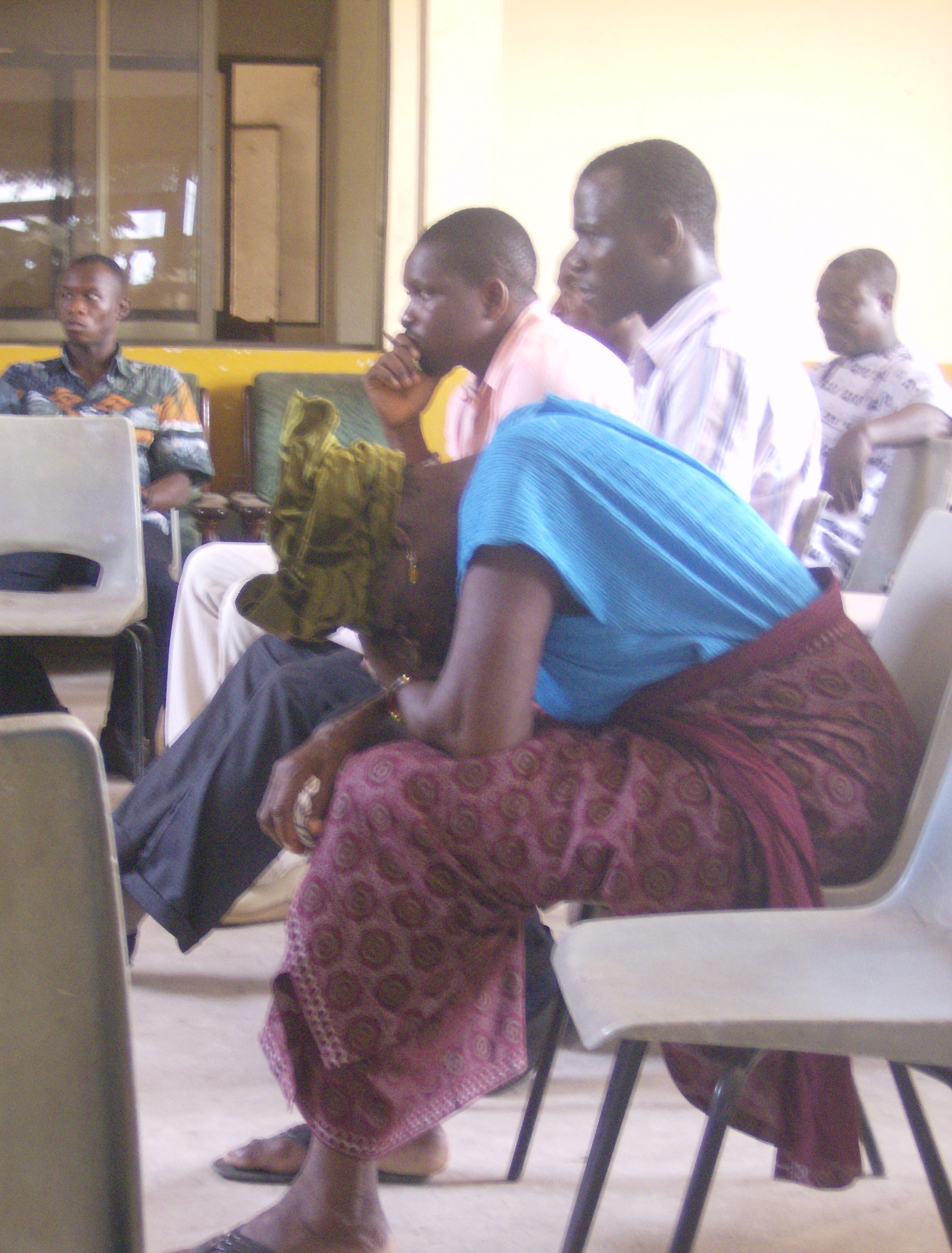
As this woman experienced at a rights-based development workshop in Tema, Ghana, development work can be tiring and frustrating. But that’s not the whole picture.
Since it’s my job these days to defend the interests of organizations that do development work, I’ve tended to silo off that part of my brain from the part of me that gets irate at home and writes about things. But this Globe and Mail editorial is so brashly ignorant that it demands a reply. It attempts to defend the merger of CIDA and Canada’s Department of Foreign Affairs and International Trade by arguing that development projects have never done anything that trade couldn’t do:
Impressive strides in poverty reduction have been made in the past 15 years in countries such as Brazil, South Africa, China, Mexico, Nigeria and others in the developing world. There are 800 million fewer people living in poverty today than there were in 1990. Some of the emerging economies are growing at a faster rate than Canada’s. The proportion of people who lack dependable access to good sources of drinking water has been halved – two years ahead of the time frame set out in the Millennium Development Goals.
There is no evidence, however, that this dramatic improvement in living standards is the result of international development assistance. Instead, these changes can be attributed mainly to trade liberalization, gains in productivity, technology and national income redistribution programs – and even to remittances from immigrants in the developed economies.
Now, it’s true that civil society organizations that wade into development work often focus on small projects and shy away from entering political debates, where uncomfortable conversations about immigration, labour laws, and land redistribution would have bigger impacts on people’s lives. CIDA has certainly been guilty of putting on these blinders. But it’s simply ignorant to argue that everything development work does could be done better by cracking countries open to global markets.
NGOs, church groups, advocacy groups, and even the terribly frightening academics who study development occupy a niche that Barrick Gold, Ministers of International Trade, and venture capitalists wouldn’t want to enter even if they had the credibility to do so.


 Chris Chang-Yen Phillips: Storyteller and People Weaver