You may have heard that it’s been a pretty awful week for CBC. The federal budget cut their funding by about $115 million, and it’s been trickling down in cuts like closing the Halifax studio where This Hour Has 22 Minutes is filmed with a live audience, and shutting down Radio One’s essays-from-abroad show Dispatches.
It’s a shame this is happening now, at a time when the network has been trying ambitious things with its music channels (the new CBC Music app is pretty fly) and trying to deepen its local relevance with expanded news coverage in Calgary and BC. Of course this affects me too, having worked with CBC and having so many colleagues still there.
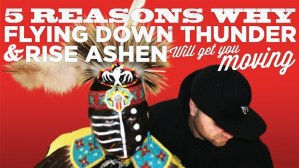
Photo Design by Ghassene Jerandi/CBC Music
One tiny glimmer of good news, though: they’ve got a worthy new music writer in Kate Adach. My bias is bare, of course: she’s a friend and intellectual muse. But she’s off to a good start with this piece on 5 reasons you should listen to recent Juno nominees Flying Down Thunder and Rise Ashen. I only wish she’d included more of their personal history; the story behind their mix of electronic and traditional Anishinaabe music demands retelling.
Kate’s a great storyteller, incidentally. Just check out this article she wrote: Happy people live longer, just ask a 104-year-old. It soothes another one of my biases: stories that show what people have to offer, rather than just what they need.
More to the point though, how reasonable do you think the federal budget cuts to CBC were? What do you think about the plan to make back some revenue by adding commercials to Radio 2 and Espace Musique?
This week’s episode of Terra Informa was a labour of love and the most fun I’ve had helping produce the show so far. We decided to use April Fool’s Day as an opportunity to make fun of our usual earnest environmental news reporting. We call it Terra MisInforma.
You can download the podcast on iTunes, stream it online or listen live in Edmonton tomorrow at 5 on CJSR 88.5 FM. Hear how the federal government passed up a huge opportunity for a parking lot with the new Rouge Valley National Park, the Top 5 Environmental Threats to Our Security and Freedom, and the Ezra Levant Award for Excellence in Excellence in Journalism.
I’ve also updated the Community section with a new Lawrence Hill lecture coming up, details about the Pride Centre re-opening, and a link to the bike lane consultations happening around Edmonton right now. The headlines might be all election all the time, but there’s still plenty of other stuff happening around town.
Last weekend our city made national headlines when a white supremacist group organized a rally downtown. Groups like these organize under the banner of “white pride” now to make their objectives seem heartwarming. This was their way of marking the International Day for the Elimination of Racial Discrimination, by defending the rights of white people to have privileges over everybody else.
I joined the anti-racist rally opposing this group, essentially to say I don’t want to live in the community they’re dreaming of. Given the potential for violence, it was pretty innocuous, and the white supremacist demonstrators went underground before I even saw them. But a lot of people told me how surprised they were this was happening in Edmonton, and it raises the question: is racism gaining ground in Edmonton?
Honestly, the attention this event got says more about what stories make easy headlines than what our city is becoming. An open call in a public square for white power is pretty shocking, and makes an easy soundbite. All around the city though, there’s hard, slow work going on to actually weave together a city where cultural differences are embraced.
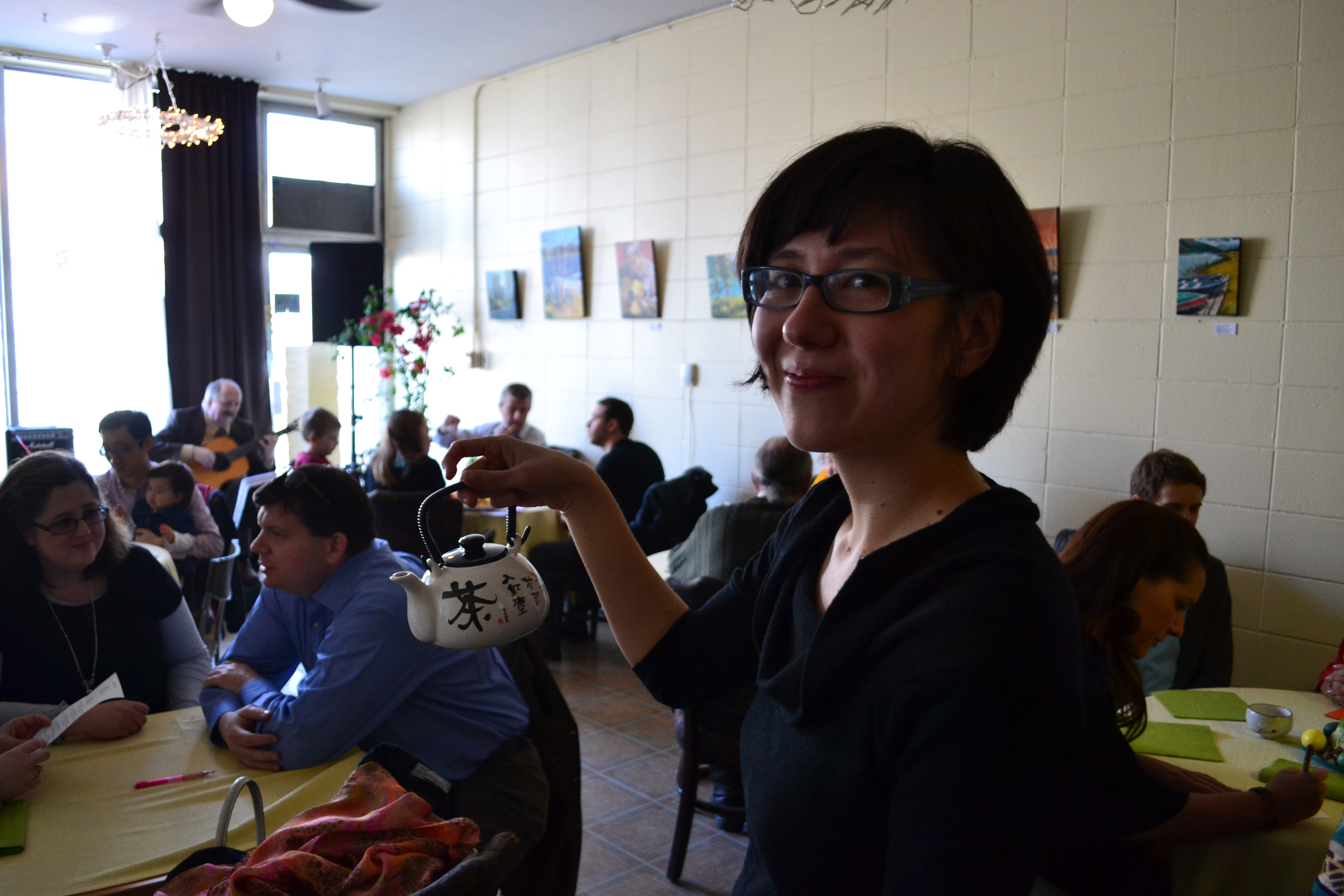
Kathryn Lennon, one of the Multicultural Teahouse organizers, shows off one of their handsome teapots.
The very same day, just a few blocks away in McCauley, there was a test-run of an idea for a Multicultural Teahouse. A cozy little place called the Pacific Cafe was occupied for the day to build a gathering space for people from different cultures to sit and chat over a cup of tea and traditional treats from Russia, Vietnam, and the Middle East.
I tried a Vietnamese tea and matching gooey dessert called Pandan cake, which came adorned with a leaf. Fortunately my friends and I were given a table with some people who had connections in the kitchen, so we got to try another four or five plates of grape leaf rolls and fried cakes after that.
The idea was created by some of the people behind the Multicultural Health Brokers Co-op, including my friend Kathryn Lennon. They’re trying to build momentum for a regular location to allow people to gather and build relationships with people from diverse backgrounds. They want it to have green spaces where people can help grow the food. And they see it as part of both the downtown redevelopment and the McCauley Revilization Strategy.
This kind of work takes planning and effort, and it doesn’t shock you the same way a headline about a racist rally might. I know that it took months of work to get all the volunteers, the location, the food, the musicians, and the art together for the teahouse. But I’d argue that this kind of slow, deliberate community-building is changing Edmonton more than any rally can.
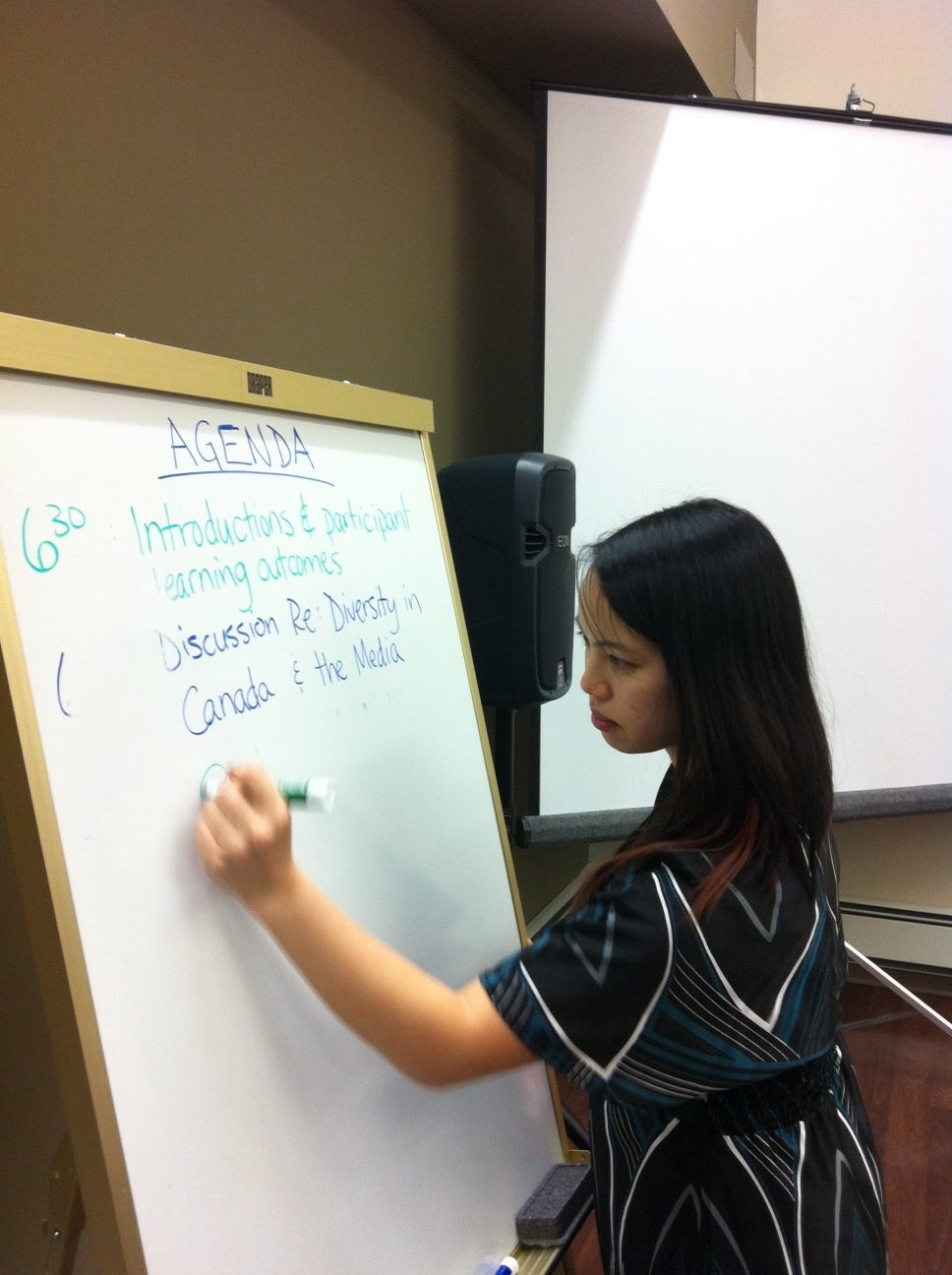
UN Association in Canada's Vivian Giang leading one of the Multimedia and Multiculturalism workshops
Once the protest signs are put away, only a few slogans and numbers resonate in people’s minds. Afterward though, there are people like Vivian Giang putting together things like the Multimedia & Multiculturalism project, trying to brainstorm ideas to get more diverse voices represented in the media.
Her organization, the UN Assocation in Canada, is offering media internships to youth from under-represented ethno-cultural communities this summer (I have a note up about it this week under Community). Those experiences have the potential to leave the TV station or newspaper that hosts them – and the intern – with a better understanding of how to capture a more inclusive spread of voices in our reporting.
There’s the Injera Initiative Soccer Match coming up tonight — an effort from folks in the Somali community to build better relationships with the police, and shake off the gang violence image they’ve been getting in Edmonton, by playing soccer with EPS officers. There’s Councillor Amarjeet Sohi’s Racism Free Edmonton group. There’s Centre for Race and Culture’s March for Understanding. There are the friendships started at teahouses that spill out of their doors.
Rallies make for easy headlines. Community-building is harder to tell a flashy story about. But I think the latter is not only more important, it’s doing more to shape what race and culture will mean in Edmonton.
Do you agree? How surprised were you that the white pride rally was organized here?

 Chris Chang-Yen Phillips: Storyteller and People Weaver