There’s a blackout in my neighborhood right now amidst this freakishly warm windy weather. It’s made me remember one thing about life in Ghana: people almost always have a Plan B.
When I was living there on a year abroad, I don’t know if I ever got over my frustration with the power suddenly going out for a whole day, or not knowing if the taps would be running when you get home. But most people just adapt – you buy a giant Polytank to save up water when it’s running, or stock plenty of candles in case there’s homework and dishes to be done.
Me, I’m huddled around some cold nachos between the fistful of candles I scrounged up around the house, hoping my phone/alarm clock/email connection will last til the morning. I guess maybe I should stop using it to write this post.
I really admire the spirit behind the It Gets Better videos. I had a lot of privileges growing up, and a compared to most queer people in the world, an incredibly supportive environment to come out into when I was younger. For kids who don’t though, it’s important to see positive role models out there, people to look up to who’ve made it through tough times and gotten stronger.
It really upset me seeing politicians starting to use this idea cynically, to make it encourage kids to look forward to a time when “it gets better” without acknowledging their power and responsibility to do something about it. So this is my spin on that idea.
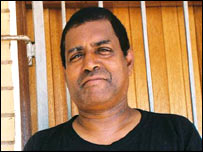
Desmond D'Sa, coordinator for the South Durban Community Environmental Alliance (Photo credit: idex.org)
It’s hard to miss the major UN climate conference going on in Durban, South Africa right now (this one’s better known as COP 17), if only for the almost-daily embarrassments from Canada’s Environment Minister Peter Kent. He’s really good at sticking to his talking points about wanting major emitters like China and India included in any binding global agreement to lower carbon emissions. He seems unwilling to admit the uncomfortable fact that in a cumulative sense Canada is also a major emitter, because we’ve run an industrialized economy on fossil fuels for well over a century.
We were throwing ideas around at Terra Informa on how to cover what’s been happening in Durban, and decided an interesting approach might be to see what kind of work environmental organizations in the city have been up to. As it turns out, this is a big story. Fellow Terra Informer Kathryn Lennon and I tracked down a man named Desmond D’Sa who’s been working for over 15 years in South Durban to protect the health of locals from pollution in the area.
Des helped start an organization called the South Durban Community Environmental Alliance when he was part of a household survey that noticed diseases like asthma and cancers were much more common in their part of the city than elsewhere. Through research and environmental monitoring, they’ve been able to connect that to the industrial sites like oil refineries and paper mills that are concentrated in the poorer neighbourhoods in the south of the city. And as you can imagine, he had a lot to say about fossil fuel industries and the UN talks.
 Chris Chang-Yen Phillips: Storyteller and People Weaver