Risky Business

If you’ve taken a chance on a new play at Edmonton’s Fringe Festival, you know the anxious thrill of sitting in your seat, wondering if it’s going to be the best $12 you ever spent, or the most tedious hour of interpretive dance you’ve ever watched. The Fringe detonates around the city for the next eleven days, and it’s got me thinking about the tension between taking a risk and finding comfort in a sure thing. This week, Fringe Theatre Adventures Executive Director Jill Roszell spoke at an Aprikat-doused Rotary Club event at the Artisan Resto Café on Whyte, where I had a chance to bounce some ideas off her.
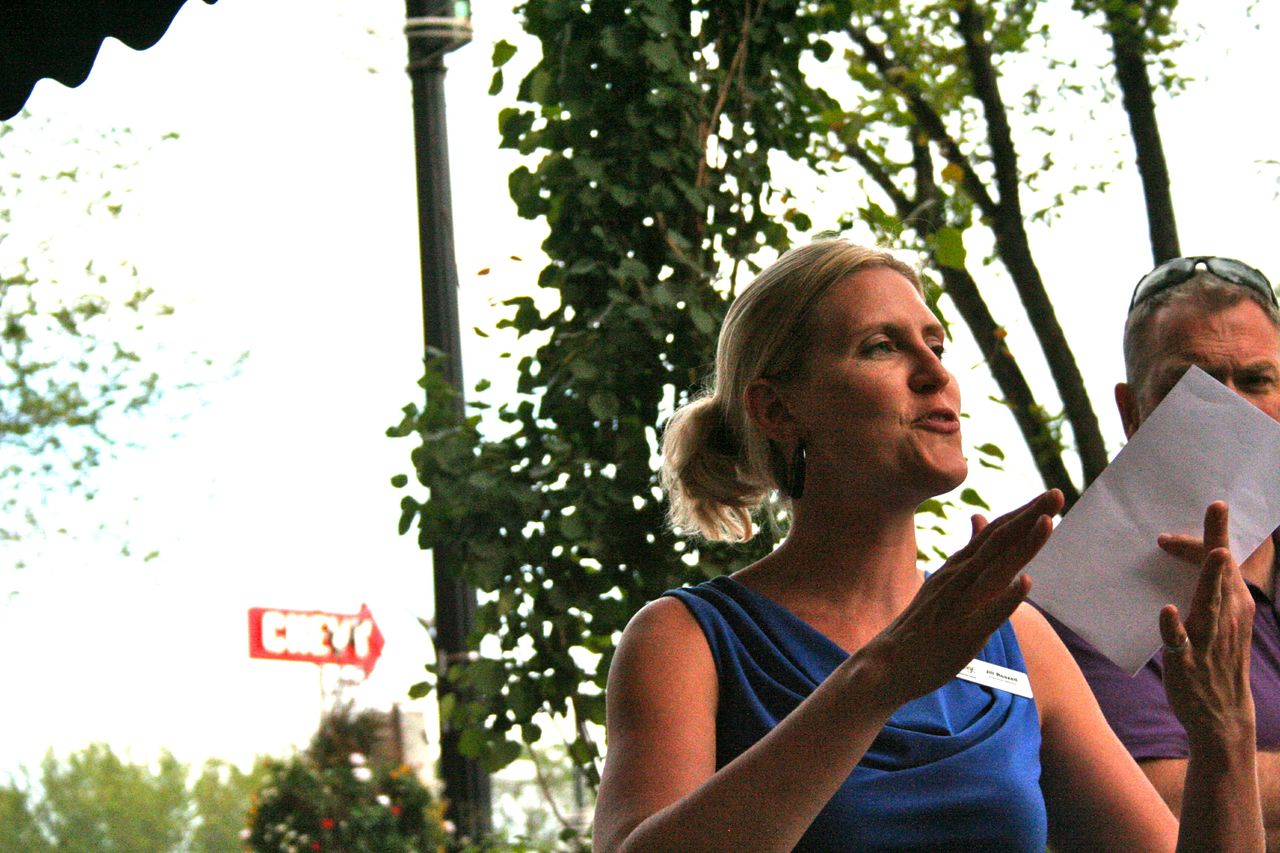
Jill raises her hands in front of a tree-lined Whyte Avenue backdrop.
Fringe Theatre Adventures Executive Director Jill Roszell sharing some stories at the Artisan Resto-Café on Whyte Ave. Photo credit: Idris Fashan

Jill has one of those horizon-wide, full-toothed smiles that says, “I love what I do.” I asked her what she anticipated would be fascinating, and this was her un-prompted answer:

“I am very interested in the zombie tag, I’m not gonna lie.”

That would be An Apocalypse Survival Guide: Undead or Alive?, going up in the TACOS space that Punctuate! curates. Un-prompted!

You might have heard of how the green onion cake-dappled, fire-juggling festival has evolved over the last few years. Since the Fringe’s inception, crowds of artists have entered their names into a lottery, hoping to be randomly selected to perform at one of the festival’s venues. That means professional performers have the same chance to get a spot as someone who’s just got a leotard and an idea. In recent years, the festival has begun allowing shows to open at BYOVs – Bring Your Own Venues. Those venues, like TACOS, can select shows that they think will be intriguing, electrifying, or just guaranteed crowd-pleasers.

The number of shows this year is so gigantic that Jill laughed about the size of the program guide. If they have to add one more page, she said, they’ll have to re-think the staples in the middle and move to a whole new binding size. This year, they’re also adding a family-friendly hangout space for those who don’t want to trundle into the beer garden, and experimenting with activities in an iconic gazebo.

What’s the most audacious thing they’ve tried in the last few years, though?

“The expansion of the BYOVs,” said Jill. “I don’t think the previous festival administrators could have anticipated the popularity of the BYOVs.”

She said she doesn’t think they fully know yet how it’s changed the character of the Fringe, but it has definitely changed the way veteran performers are thinking about the festival.

“Local companies that know that they have access to venues,” she explained, “are not putting their names in the lottery as much. So it’s opening up that local lottery for people that don’t have access to venues. We’re getting different groups come through the lottery system. And we’re also seeing a lot of national and international touring artists start to embrace the BYOVs because they know they can get a spot. Places like Edinburgh and Adelaide, the bigger Fringes than Edmonton… they do all BYOV, so it’s all based on venue.”

What’s the concern, if it’s bringing us zombie tag?

“In some ways that’s good,” said Roszell, “in some ways that’s taking away from the spirit of risk and chance. The Varscona [Theatre], there was a huge controvery a number of years ago when they decided to become a BYOV and not a festival venue anymore. At the end of the day, the decision was made that because companies like Teatro la Quindicina grew up in the Fringe, you know… they got tired of playing the lottery game.”

Being able to choose the programming at their own venue, she said, lets established companies like them guarantee opportunities to their artists who want to grow in a new direction, like actors who want to write plays for the first time. More to the point, she added, festivalgoers come back every year expecting to see signature artists like Stewart Lemoine’s work, or Guys in Disguise.

BYOV-hosted shows make up about half of the festival this year. For now, said Jill, it’s not obvious that their hyper-expansion is threatening that heady anticipation you can get by buying a ticket to a show you’ve never heard of before. Their strategy for managing the tension between those forces at the moment is to keep the number of BYOV and lottery shows the same.

What does she want to experiment with next?

“I really want to do some more work with found space,” Jill mused. In other cities, she’s seen actors hang from trees, or perform their whole show outside in a glass cube.

Too many spaces with chairs right now, I asked? Pretty much, she agreed. She beamed as she leaned over with her next idea. You know the glassed-in outdoor washroom everybody’s talking about on Whyte Ave?

“I want to commission a show to do in that bathroom. You could do an interpretive dance in there.”
Enough Already

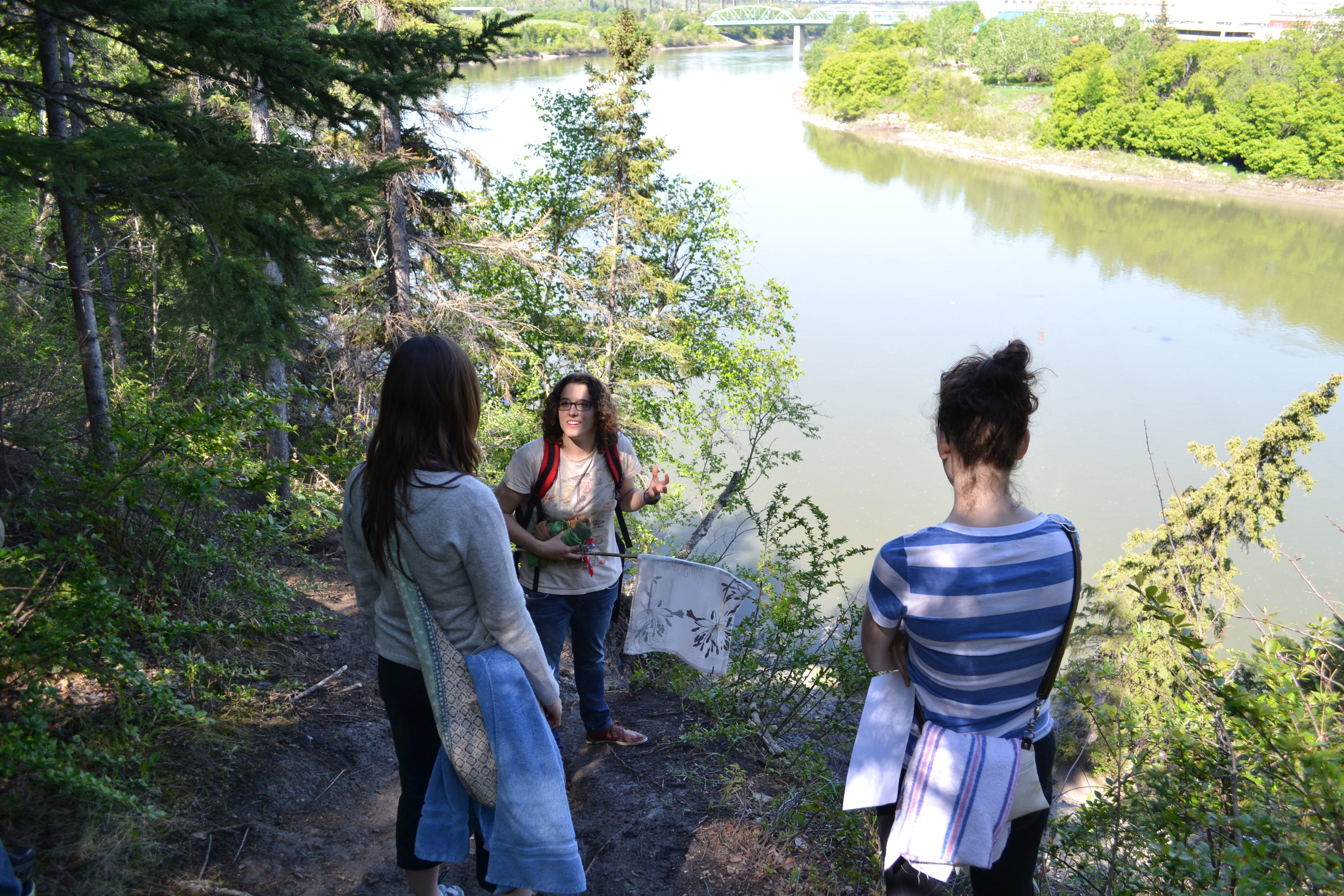
One of my favourite pictures from the whole Shareables enterprise, from last summer's walk on Plants in the River Valley.
One of my favourite pictures from the whole Shareables enterprise, from last summer’s walk on Plants in the River Valley.

Last summer, when I went door to door looking for people who wanted to show off their backyard garden for Shareable Neighbourhood, and everything they knew about growing plants, one person whose door I knocked left a thought with me in return. She was asking about the motivations and mission behind Shareable Neighbourhood, and with her I played up how much I wanted to give neighbours an opportunity to get to know each other better, and feel a little more tightly woven — like they had people around them they could rely on.

She seemed dismissive of the idea. Old Strathcona and Mill Creek already have lots of community groups, she said. Don’t you think there are enough already?

Since then, I’ve kept worrying that maybe she’s right. Especially on days like the Urban Birds walk or the Death in the River Valley walk, when only a handful of us showed up. But thinking about how Punctuate! player Adam Cope recently took his own life, and a classmate named Alex before that, and Ross Moroz before that, have convinced me that she’s wrong.

I feel like Holden Caulfield at the end of Catcher in the Rye. How he sees himself in that field, watching all those kids falling, and can’t help but feel like he’s got to catch them all. I knew Adam. I knew Ross. I didn’t know how to save them — didn’t even know they needed saving — but I feel like I understand their despair. Like life is too painful, too unbearable, and it’s relentless. It never stops. And it can feel like you don’t have any options, any ways to make it better, or make the pain go away. I’ve felt that pain before, and it’s only because I felt how strong the web of care was around me that I clambered out.

How could anyone look at despair like that and think, “You know what? We’ve got enough circles of care in our community.”

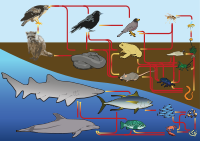
A terrestrial and aquatic food web
I’m really curious about the relationship between the raccoon and the snake. Like, really? (Photo: LadyofHats)

In ecology, we recognize that systems are more resilient when they’re more complex, with greater interconnections. Simplified ecosystems, with only one genetic variety of a plant or too few pollinators, are more vulnerable. If anything happens to one component, the whole thing could collapse.

In human communities, the same thing is true. Organizations are susceptible to collapse if too few people are doing all the work. If one gets sick, it can throw the whole organization into crisis, or more often, people will make themselves sick by taking on more than they can really handle.

Shareable Neighbourhood is partly an attempt to make our neighbourhood more resilient by showing people that they have something to offer, and others appreciate and recognize it. Recognizing that worth in one another can light up both individuals, and nurture their care and compassion for one another. Maybe, one day, when one needs help, they’ll think of the other and be less shy to ask.

With this latest walk happening tonight, we really wanted to get some of the kids at the Old Strathcona Youth Society involved, because the theme is public art, and they are a perfect model of people who have expertise that’s not accessed or recognized enough. They make street art! And when they think about the controversies around it, they have a perspective that middle class people down the street don’t. I told Jaya, one of the staff there, that I was really excited that they were participating. Here’s what she wrote back:

Doing small things with great love and compassion to create compassionate communities goes a long way!

I sure hope so.

Celebrate eccentricity and other lessons from Björk

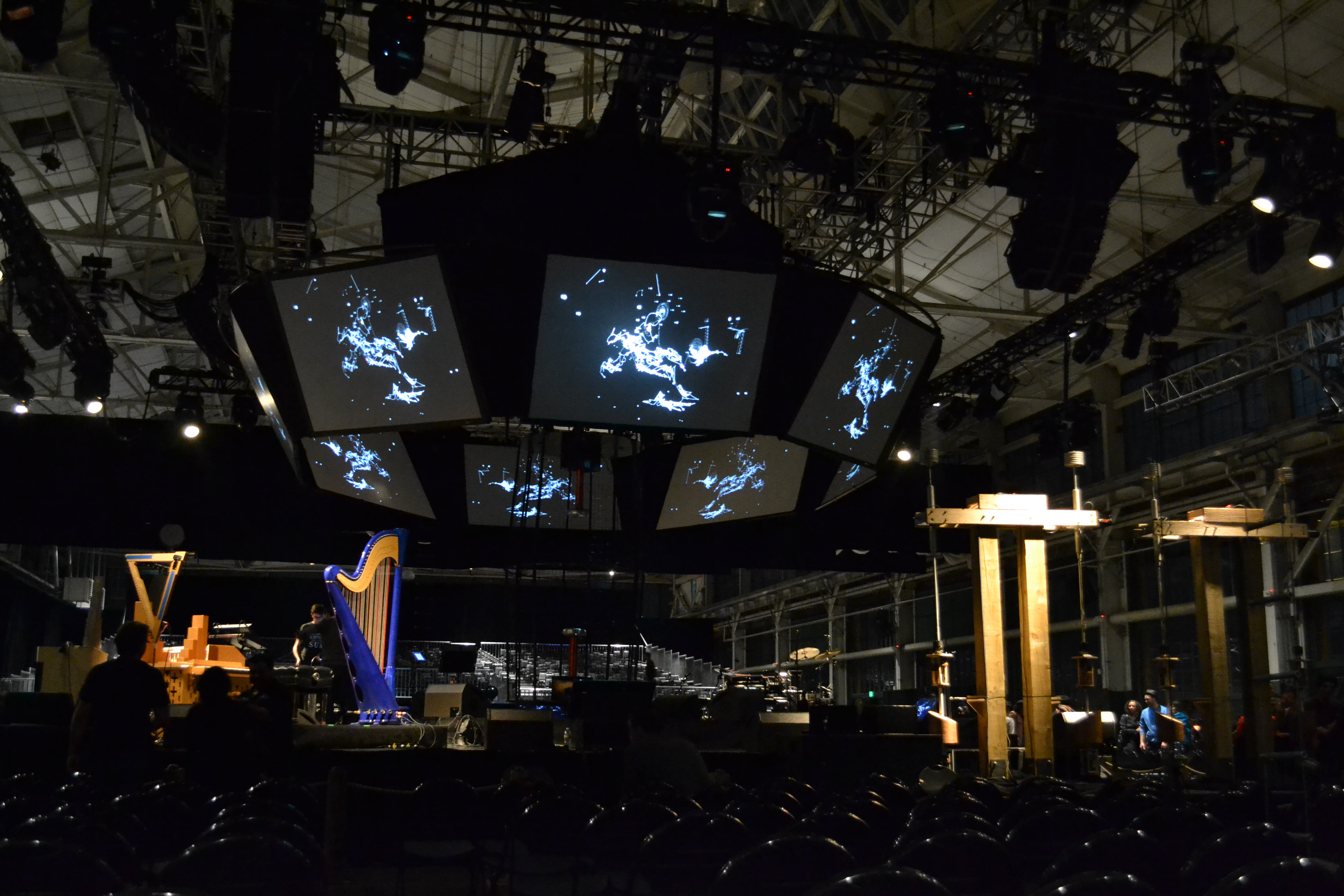
A circle of screens showing constellations hang above the instruments on stage at the Craneway Pavillion
Seeing Björk perform live in San Francisco with this swirl of screens and instruments around her was a treat for the ears and the soul.

Last week, I got to see one of my idols in action in San Francisco, and every splash of electricity, every heart-thumping wail, helped affirm the creative and spiritual path I’ve been drawing up for myself. Many people have asked what it was like seeing Icelandic singer Björk perform live for the first time, so I’ve tried to distill some of the lessons I learned here. First, let me set the scene for you.

Björk has always had murmurs of volcanoes and snow-goddesses in her music, but her latest project, Biophilia, explicitly invites you to think about our place in nature as sort of a midway point between the cosmic and the microscopic. I’ve written before about the iPad/iPhone apps she created for Biophilia. It was something different entirely to see her perform the songs beside a harbour, with the almost-full moon rising behind her.

Man in swan dress stands outside with friends smoking
The obligatory fan wearing a swan dress outside.

It seemed right for my boyfriend and I to dress up a bit whimsically, considering she’s performed in a swan dress and an outfit made of tinkly red fingers of glass. We didn’t realize we’d be so out of place in the city where she was performing, though. Across the Bay from San Francisco itself, she’d set up camp in an old wartime assembly plant in Richmond, refurbished into a glassed-in pavillion overlooking the harbour. I’m glad we wandered around, because it helped us put the evening in context. Richmond is palpably poorer, more latino, and more black, than San Francisco. And while the pavillion was breath-taking to be inside, wandering drew my attention to the more sinister side-effects of the refineries and factories in today’s Richmond.

Meanwhile, we stood in line with digital artists, punk kids from Sacramento, and yuppie parents from Oakland. Once inside, we found a spot standing ten metres away from a small stage surrounded on all sides by fellow eccentrics, creators, and dreamers. The lights dimmed, a ring of screens lit up with videos introduced by nature documentarian David Attenborough, and a cage of tesla coils descended from the ceiling to join the enormous pendulum harps, drums, and pipe organ on stage. That’s when Björk herself came out with ruby platform shoes, a frizzed-out blue and orange wig, and a choir in tow to teach us this:

  • Celebrate eccentricity
    Songs about lunar cycles, and videos of starfish embracing each other, are not for everyone. Björk’s work kind of embraces her fearless, outlandish tendencies, though. As a consequence, she accomplishes things that a less daring artist would never get close to. What could I accomplish if I was less afraid of what people would say, or how they’d react?
  • Don’t give up on the impossible
    Like a giant child’s legs dangling under a desk, the pendulum harp she played was an invention from her own mind. It is literally four enormous wooden pendulums, and when before each one falls she can rotate a circular harp wrapped around its base to pluck a different note. It perfectly suits a song about gravity and Earth’s place in the solar system. She dreamed it up this incredibly complex thing,approached robotics experts and programmers, and gave the world something that never existed before. What else could we make if we looked at our audacious dreams and said, “Yes please, let’s create that”?
  • Comfort is an illusion
    Björk is almost 50* now, but she’s still creatively peaking. Sometimes her experiments don’t work, but she’s not afraid to skip most of the hits and habits that made her famous, to make space to try something new. I think a lot of artists get into a rut of continually reproducing their old stuff to make their fans happy. All the songs about viruses, DNA, and cosmic origins on Biophilia showed me that it’s often safer to let go of what feels comfortable though, because the meaningful and relevant ideas change a lot throughout our lives.
  • Go beyond aesthetics
    Frizzy wigs and tesla coils playing bass synths with lightning are cool, of course, but they’re only worth seeing if they add up to a message. Throughout Björk’s music, there are messages about the need to forgive yourself, to stand up and fight against injustice, to embrace where you fit into a landscape. M.I.A. and K’naan are two other incredible musicians who get that it’s fine to lure people in with sick beats and catchy melodies, but what keeps people coming back are layers of real meaning behind them.
  • Giving matters more than getting
    Generosity comes up a lot in songs like Undo and Generous Palmstroke. This was a theme we felt many times in San Francisco: the only way to create lasting, fruitful bonds in this world, between people, with the rest of our environment, everywhere, is to offer more than you expect to get back.

On top of all of these experiences, it was such a joy to be in that tightly knit little crowd. We serendipitously stood beside a thoughtful quantum physicist from New Mexico and his hilarious wife, an optical engineer who works with lasers, photographs reflections, and sings Björk’s Cosmogony with her daughter as a lullaby.

What was seeing Björk like? It was like being raised up by a sea of people not afraid of their passion.

*Oops! I accidentally aged her and said she was over 50 originally. My apologies for awarding un-earned years.