Civic Election 2013: Taking a Special Interest

In April this year, an anonymous source leaked a grainy video of a closed-door meeting among some of Calgary’s real estate developers. A grainy video worthy of media attention should be enough to make anyone caught on film gulp, and in this case the footage made some Calgarians furious. Cal Wenzel, founder of Shane Homes, was rallying fellow housing developers to pour fountains of money into the upcoming municipal election to kick out anti-sprawl candidates on city council. I’ve been trying to untangle why this video has made some people incensed, while a slew of other special interest groups supporting candidates in Edmonton have become local celebrities.

Wenzel tells the audience in the leaked video that he and other developers had doled out $1.1 million in donations to the conservative Manning Centre and Manning Foundation in order to defeat city council members on “the dark side.” The Manning Centre’s new Municipal Governance Project is aiming to colour Canada’s municipal politics a little bluer by offering training and guidance to right-leaning candidates. At least five of this year’s Calgary city council candidates have received training through the program: Joe Magliocca, James Maxim, Sean Chu, Jordan Katz and Kevin Taylor, who also received transportation and signage help from Cal Wenzel.

At the time, Calgary Mayor Naheed Nenshi accused Wenzel of admitting that the developers and the Manning Centre had collaborated to severely overstep election finance rules. Individuals and organizations are only allowed to donate up to $5000 to a candidate in any year (no charges have been laid in this case, though).

While this wealthy group of developers may well be violating the spirit of the law, I wonder how much of the backlash (such a recent piece from David Climenhaga) has come from a feeling that this amount of influence is unfair, and how much has come from ideological opposition to the ideas.

This year, special interest groups have also stepped up in Edmonton to test candidates’ support for queer issues, sustainable urban agriculture, and arts and culture. Several have published the results of surveys they sent out to the candidates, including Yuri Wuensch’s highly-visible Vote Zombie Wall campaign – focused on keeping out the hordes by combatting sprawl. Wuensch has appeared at election events all over town with little controversy. So have the leaders of Activat ED, a youth-led group endorsing progressive candidates. And in fact, both of the latter appeared on my own radio show, Terra Informa.

Each of these groups has advanced a special interest by lending resources and limelight to candidates, or highlighting their credibility on certain issues. We have a word for that: civil society. Civil society groups, such as think tanks, churches, blogs and non-profits, carve out an important part of the public conversation outside of government and business. They’re a vital part of becoming informed and active in negotiating decisions in a democracy, whether we’re debating suburb growth or clandestine chickens.

It may be more productive to make sure that civil society groups are transparent in their activity, and accountable to our elections laws, than to try to shame them out of town.
What trade can’t do

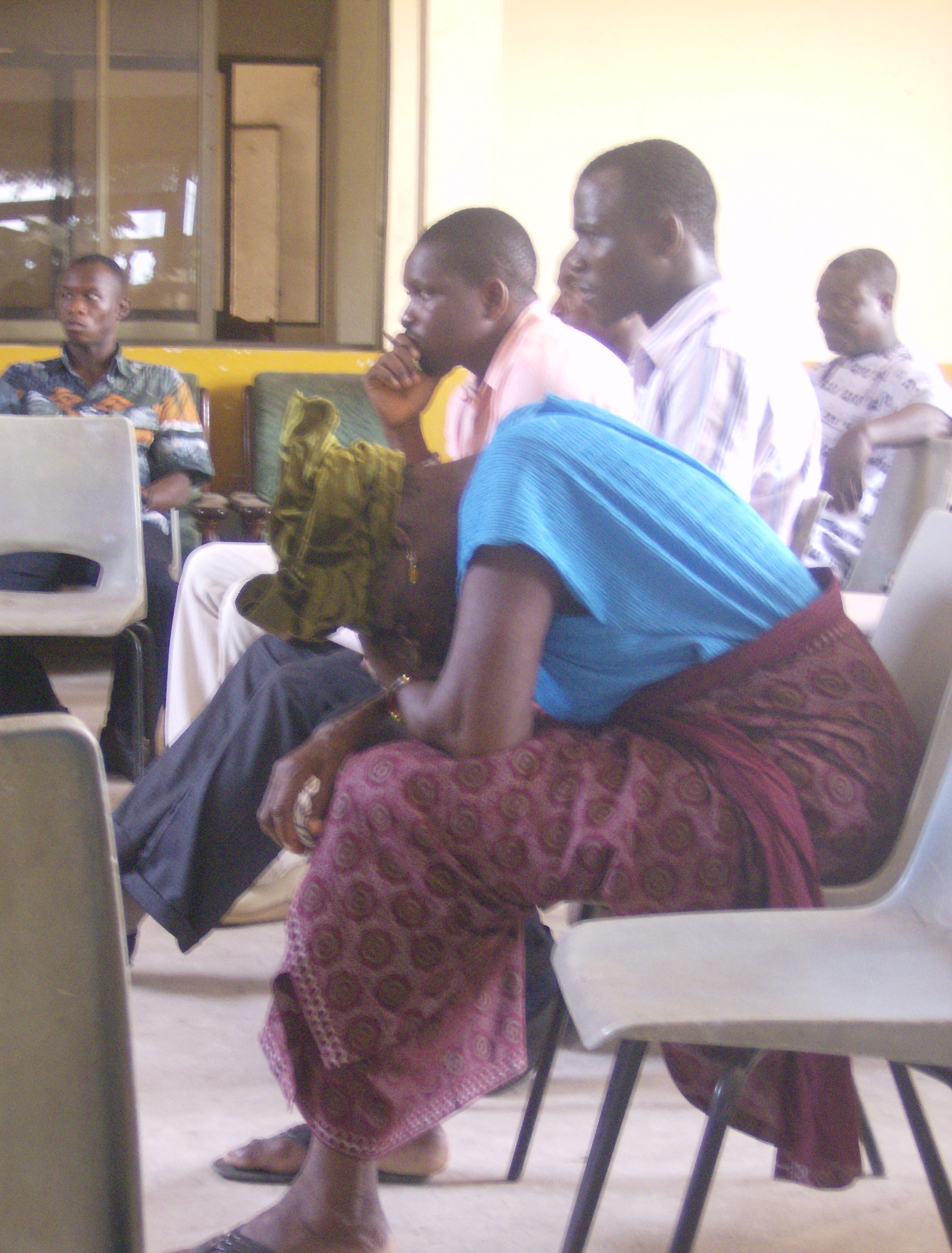
As this woman experienced at a rights-based development workshop in Tema, Ghana, development work can be tiring and frustrating. But that's not the whole picture.
As this woman experienced at a rights-based development workshop in Tema, Ghana, development work can be tiring and frustrating. But that’s not the whole picture.

Since it’s my job these days to defend the interests of organizations that do development work, I’ve tended to silo off that part of my brain from the part of me that gets irate at home and writes about things. But this Globe and Mail editorial is so brashly ignorant that it demands a reply. It attempts to defend the merger of CIDA and Canada’s Department of Foreign Affairs and International Trade by arguing that development projects have never done anything that trade couldn’t do:

Impressive strides in poverty reduction have been made in the past 15 years in countries such as Brazil, South Africa, China, Mexico, Nigeria and others in the developing world. There are 800 million fewer people living in poverty today than there were in 1990. Some of the emerging economies are growing at a faster rate than Canada’s. The proportion of people who lack dependable access to good sources of drinking water has been halved – two years ahead of the time frame set out in the Millennium Development Goals.

There is no evidence, however, that this dramatic improvement in living standards is the result of international development assistance. Instead, these changes can be attributed mainly to trade liberalization, gains in productivity, technology and national income redistribution programs – and even to remittances from immigrants in the developed economies.

Now, it’s true that civil society organizations that wade into development work often focus on small projects and shy away from entering political debates, where uncomfortable conversations about immigration, labour laws, and land redistribution would have bigger impacts on people’s lives. CIDA has certainly been guilty of putting on these blinders. But it’s simply ignorant to argue that everything development work does could be done better by cracking countries open to global markets.

Trade liberalization doesn’t organize people to claim and manage their constitutional rights to water, land, clean air, or a place to live. Mining conglomerates, as a rule, don’t push for (and try to improve) school feeding programs that purchase food locally to support the small-scale farmers sending their kids to those schools instead of industrial corn growers in Iowa. Hedge funds buying up land to make a quick buck don’t stick around in a community after the water has gone and the work has dried up to see that climate change is destroying a community’s livelihood, then get out on the streets demanding climate justice.

NGOs, church groups, advocacy groups, and even the terribly frightening academics who study development occupy a niche that Barrick Gold, Ministers of International Trade, and venture capitalists wouldn’t want to enter even if they had the credibility to do so.

To the end, my dear

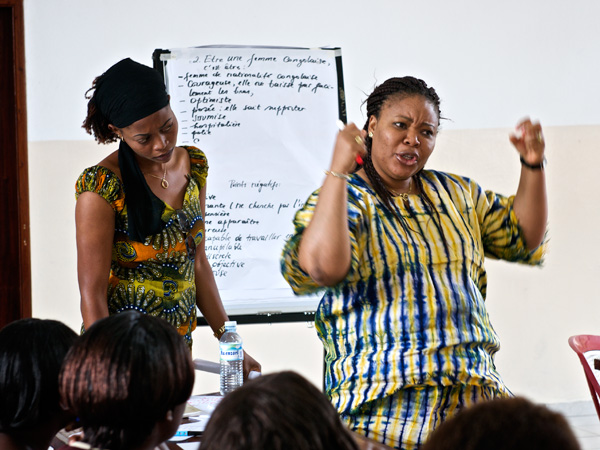
Nobel Peace Prize winner Leymah Gbowee stands in front of a white board with her hands raised like she's trying to push the crowd into action.
Nobel Peace Prize Laureate Leymah Gbowee confided that Archbishop Desmond Tutu warned her to watch her words carefully after winning, since they’d instantly be published on the internet (Photo by Alissa Everett)

Last night, my friend Evan and I had the pleasure of seeing Nobel Peace Prize winners Leymah Gbowee and Tawakkol Karman speak at the University of Alberta’s Festival of Ideas. Gbowee is famous for her work leading a women’s movement that helped end the civil war in Liberia, but she’s based in Ghana these days. The first thing she said on stage was that she was thankful to the organizers for coordinating a trip that was as long and complicated “as going to space.”

Karman is renowned now for her work rallying Yemenis out on the streets to fight for their right to free expression, free speech, and to eventually to end the rule of President Ali Abdullah Saleh. As a journalist, activist, and mother of three she’s taken extraordinary risks to fight for civil rights in Yemen. She said even after the lives of her children were threatened, she took courage knowing that millions more youths would take to the streets if they were harmed. Incredible change is possible, she said, if you are willing to take on a cause and pursue it to the very end. Have a goal in mind, and make a path towards it.

Moreover, she said women need to take on the responsibility for finding a just place for themselves in Yemeni society.

“Women must be the leaders, not ask for leadership from anyone,” she said. “We don’t want gifts from anyone. We want what we deserve.”

Similarly, Gbowee’s life seems to be a story of recognizing a responsibility to step up to the plate when no one else can. After 2000, ten years after the Liberian civil war began, a movement of Christian and Muslim women was building around the country to call for peace. She had convinced many of them that this was their fight, and they wanted her to lead them. Gbowee said she must have quit fifty times, and each time she’d find 200 hundred women waiting outside her house, telling her it was time to go back to work.

It makes me wonder — how seriously do most of us take the idea that we’re the ones who need to step up to the plate to solve our big crises, and we must follow our work to the very end? That, as the Hopi poem (or maybe prophecy) goes, “We are the ones we’ve been waiting for”?

I have an uncomfortable sense that many of us engaged in environmental and social justice work find our milestones more in our efforts than our accomplishments.