Dr James Orbinski spoke at the Jubilee Auditorium on June 13, 2012.
Last week, I had a chance to interview Dr James Orbinski for The CJSR Edition, our freshly-minted local news show. The former international head of Médecins Sans Frontières/ Doctors Without Borders was at the University of Alberta to accept an honourary degree. I met a few folks who saw his convocation speech, and they seemed kind of shell-shocked at how persuasively he had convinced them to do the hard thing and take some responsibility to make things better.
What struck me when we spoke was this comment about whether vocal civil society groups should risk taking federal funding or charitable status these days:
“The most important and powerful tool that any citizen has is his or her voice. The free and public expression using that voice is very much in my view a duty and a responsibility of citizenship. And if government — in this particular case, the Harper government — chooses to use tools of government, funding for example, in an effort to quell expression, and voice, and public engagement and public criticism, then citizens and citizen organizations should just simply refuse that funding.”
Last weekend was kind of like Christmas and my birthday all rolled into one, but with more pink glitter. Some friends I hadn’t seen for years came to town just in time for the Pride parade, and taught me about a fascinating idea: the need to test the invisible webs around you. This week, I needed to test one of mine, and it was harrowing but marvelous. Before I get to my little web though, let me explain what happened.
As the Edmonton Journal noted, there was plenty to celebrate at Pride this year, and I was happy to march with friends in Camp fYrefly, a leadership retreat for queer and allied youth. The creamy pink frosting on top of this cupcake, though, was finding out that my friends Kathleen and Daltry were both in town. We went to a tiny, intimate concert together at CKUA, and sat cross-legged on the floor together surrounded my sweet music.
Of course, what brought them back to Edmonton was not so sweet. A friend took his own life recently, and they’d come for his service.
Daltry’s mom was there too, and we were exchanging stories and proverbs by the punchbowl when the conversation turned to this friend, and what had led to his suicide. If only, she said, he could have seen the massive web of love that coalesced around him for that funeral, seen it while he was still alive. If only, she said, we had more chances to test those webs and see what they look like.
It was funny because someone else at the concert had just told me about another kind of important test. She was about to travel to Montreal, and I asked her if she planned on joining the protests there. She sighed, and said probably, but she was pretty anxious about getting arrested. A fine would basically ruin her finances at school for the next year, but she said the Quebec government’s new laws to restrain the movement made it hard for her to shut up.
It frustrated her because it seemed to confirm a theory of Nietzsche’s: that in Western democracies, we never really exercise our liberty because we trust that it’ll be there when we need it. That in a moment of crisis, the state would give us space to claim it. To her, the laws banning masked protests, unannounced gatherings of 50+ people, and fines in the tens of thousands of dollars for students group illegally organizing, smacked of a promise that was shown as false the moment it was tested.
What occurred to me was that the Pride parade is just such an event: an opportunity to test the webs of liberty and love that we hope are there. Twenty years ago, marching down the street declaring this kind of love here meant getting chased down the street and called faggots, and risking beatings from homophobic crowds. In most places in the world, it still does. This year, that test was honoured in Edmonton by the appearance of our province’s premier, and hours of rainbow flags and heavy mascara and dance music downtown.
Which brings me to my own harrowing test this week. After the glitter settled, I realized I had mixed up a deadline and had less than 24 hours to make a gigantic job application, with three sealed references, physically manifest itself across the country to be hand-delivered. It happened.
I’d like to say it was incredible, but it was really just implausible. So many brains working so hard to get these documents together, and printed out in another city? I felt like I was facing sub-District 12 odds of making it. But friends and old bosses pulled through in a way I was honestly astonished by. It was humbling.
It’s not often we get a chance to test those invisible webs. I am truly blessed to say that when I needed mine, it was there. To every one of you out there who’s part of it, thank you.
Tomorrow is the big election, and I’m finishing this profile series with the ultimate underdog: Meagen LaFave, Wildrose candidate for Edmonton-Strathcona. She’s running for a party that’s climbed to the top of the provincial polls, but in a district that’s still very tough.
Seeing what makes a libertarian like LaFave want to run in a safe NDP riding was probably the most interesting experience I had working on this series. I talked to her about how her experience in health services affects her views on health care reform, what a libertarian thinks about recognizing rights for transgender Albertans, and why she chose Strathcona over any other part of the city.
Meagen LaFave says she even writes "Sorry I missed you" post-its while she's watching TV these days.
As Meagen LaFave’s team watches a wind storm die down from her campaign office window, she coughs and finishes writing a stack of “Sorry I missed you” post-its. At 23, she’s the youngest Wildrose candidate in the province, and she’s still getting over a cold from pulling out all the stops campaigning.
On the wall, a whiteboard shows polling results from April 3rd. LaFave’s campaign manager tells me they stopped updating it once it got busy and they realized provincial numbers don’t mean much in what they wryly call the “People’s Republic of Strathcona.”
The NDP’s Rachel Notley is the current MLA for this riding, and their party has held it for most of the last 26 years. Notley’s predecessor Raj Pannu was popular enough to earn the nickname “Raj Against the Machine”. It doesn’t get much safer for the NDP in Alberta, but LaFave says Strathcona’s the part of the city that fits her best.
“I’ve lived in this riding, I love this riding,” she says. This is where she long-boards, shops, and watches theatre. It’s also where she works for a research group and bio-specimen business within the U of A.
There are a lot of conservatives in this area looking for an alternative, she says, and she thinks it helps that she’s a libertarian but not a hard-line social conservative.
LaFave says she couldn’t disagree more with Allan “lake of fire” Hunsperger about condemning gay relationships, for example. She believes it’s his right to say what he thinks, though.
Getting your hands dirty, starting work at 14
What made LaFave want to run, knowing the odds?
“I’m a pretty type-A person,” she says. “I went from being a bookkeeper to the business manager of my company.” So looking at the challenges, she figured if you’re going to get your hands dirty, you might as well get them really dirty.
“The libertarian values, frankly,” were what LaFave says attracted her to Wildrose. She had watched their development for years while studying political science and history at the U of A, and finally joined the party in 2011.
Like many Wildrose members, she used to be a PC supporter. Eventually stories of doctor intimidation, seemingly ever-increasing hospital wait times and accountability issues convinced her the party was broken. She didn’t expect Wildrose to take off so much, though.
Born and raised in Edmonton, LaFave says she has “quite a bit of blue collar” in her. She credits her entrepreneurial father and accountant mother with teaching her to be fiscally responsible. The day she turned 14, she started her first job.
The Wildrose Party has been criticized for fielding so many candidates like LaFave without experience holding public office. There are parallels to the flood of MPs elected in Quebec from the NDP just last year, many of whom were mocked at first but have proven to be capable politicians.
LaFave admits she doesn’t follow federal politics much, but thinks she has weight from her work experience, and is privileged to see dysfunction in our health care system through her work with Alberta Health Services and the U of A.
“Everybody getting involved in politics starts from ground zero.”
The relief valve of more private health care
Beneath the Wildrose T-shirts, LaFave's office keeps a stack of the Edmonton Senior papers where they bought an ad.
Health care questions are definitely LaFave’s favourite to answer at the door. One woman she meets is encouraged by Wildrose’s promise to increase funding for home care, but wary of a two-tier system emerging. LaFave emphasises that they’re only proposing publicly funding more private delivery if a wait-time guarantee isn’t met.
“But what happens when that door opens?” the woman asks.
It’s a question LaFave doesn’t mind answering. Her experiences working with Alberta Health Services have made her adamant that big changes need to be made to the province’s health care system.
There’s a huge amount of waste in the bureaucracy, she says. Because her company is a not a for-profit entity connected to AHS and the University, it has to pay a large chunk of any funding it gets directly to their joint research centre NACTRC. LaFave says over the years NACTRC has stopped providing even basic clinic space in exchange for that money, and concludes the money is now just boosting bureaucrats’ salaries.
I ask LaFave why not spend her energy reforming the bureaucracy within the public system if she has these insights. There’s a lot of evidence that private delivery of health care is more expensive than public delivery. For example, Canadian Doctors for Medicare has published a report showing the “pac man” analogy of health care continually eating up more of provincial budgets is mostly due to shrinking revenues and rising costs of private services like drug and dental insurance.
LaFave also works directly with billing, so I point out that a lot of research shows the exorbitant costs of the US system are partly pushed up by the amount of private health care providers they have trying to untangle a web of who pays for which patients to use what services (This American Life has a great special called More is Less that explains this in more detail).
LaFave is firm that she sees so many superfluous people working in health care billing in Alberta that cutting their jobs would balance that out. And the wait-time guarantee would just be a relief valve, she says, until more front-line doctors and nurses are hired.
What seems fuzzy is how a Wildrose government would gauge when they cross that finish line.
Those contentious moral issues
Even in the People’s Republic, the Wildrose name gets a lot of people excited about change. One man wants to meet LaFave at the door just to tell her, “We need new leadership. Big time.”
But she tells me that questions about homophobia, racism and other bigotry among Wildrose candidates have outgrown most of the policy questions people pose.
“My opinions are not the same [as those views],” she says. “That’s where the libertarian thing fits me so well.”
So I ask her what the libertarian response would be if a gay constituent said a marriage commissioner had denied their right to that public service, by declaring it violated their conscience rights. She pauses.
“I haven’t really considered whether someone should be forced to offer marriage,” LaFave answers honestly, “because I wouldn’t want to force someone to do something they disagree with.”
It’s an obvious tension in her desire to champion individual rights, and she doesn’t have an answer yet on how to negotiate them when they compete. She’d probably want to help both sides resolve the issue through the courts, she says.
Finally, I ask Lafave about the Wildrose pledge not to legislate on contentious moral issues. This has mostly been framed as a way to reassure voters they won’t try to do something like de-list abortion. The flip side is it implies they won’t work on expanding legal protections for groups like trans people.
LaFave admits Wildrose’s pledge means they wouldn’t bring any such legislation forward. That doesn’t mean she wouldn’t raise the issue with her caucus if constituents told her it mattered.
“As a representative for Strathcona,” she explains, “if people said it’s something they want me to bring forward, that’s my job.”
“A libertarian wants people to do what they want to do, and work where they want to work.”

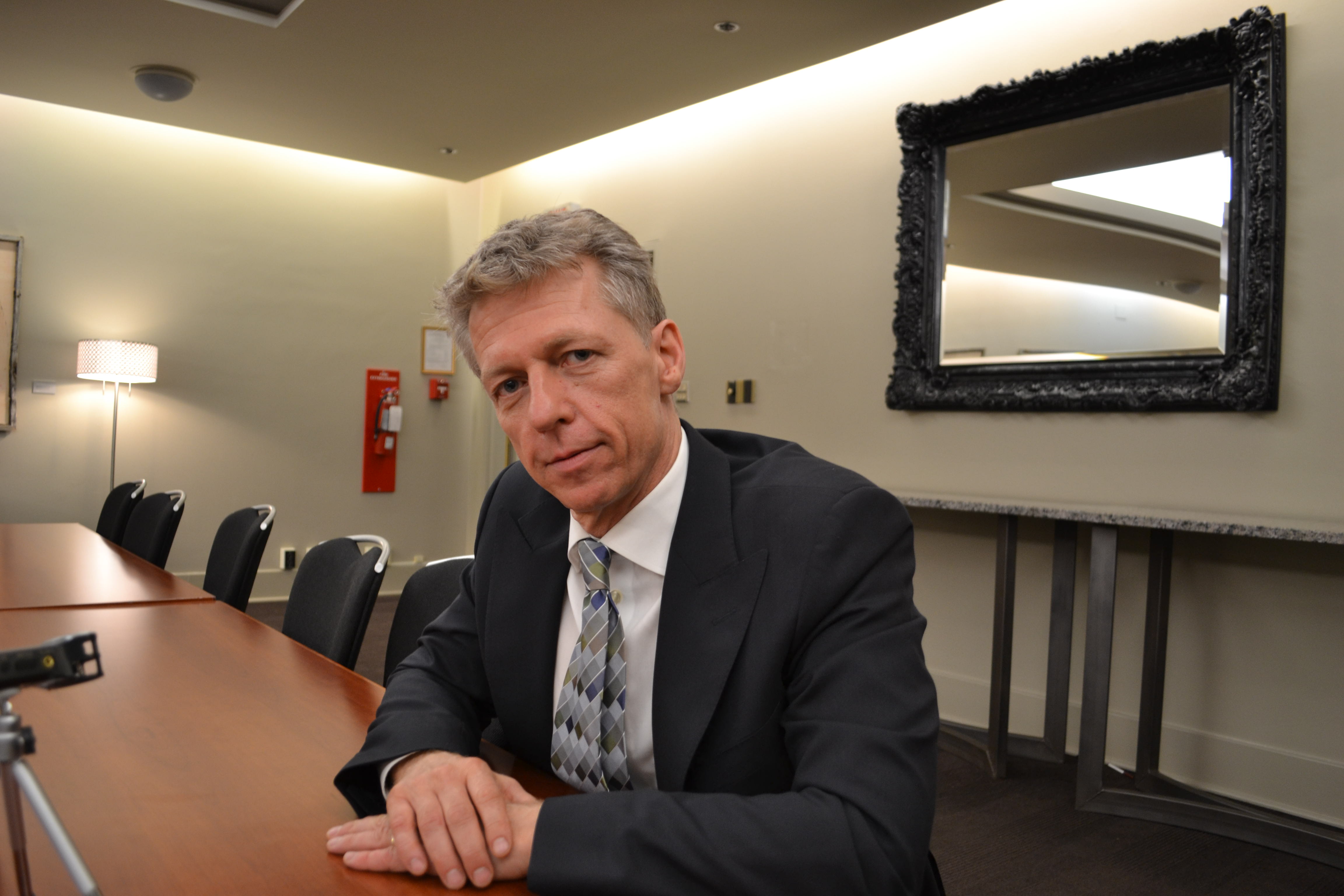



 Chris Chang-Yen Phillips: Storyteller and People Weaver