Paleontology and Wildness as Heritage Performance in the Burgess Shale

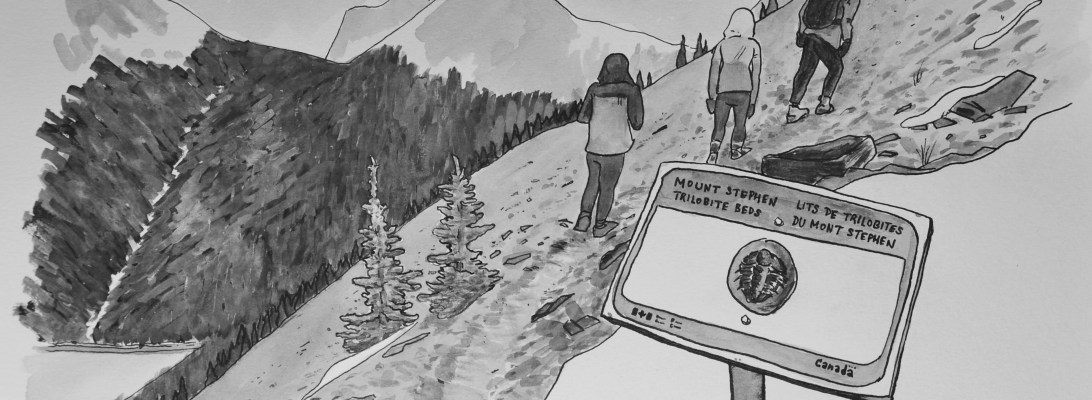
Hikers walking up to the Mount Stephen Trilobite Beds in Yoho (illustration by Chris Chang-Yen Phillips).

This is an academic presentation about my masters research, delivered at the AMPS Prague – Heritages conference on June 29, 2023.

High in the Rocky Mountains of Canada’s Yoho National Park, the Burgess Shale fossil beds demonstrate dilemmas presented by fossil-rich World Heritage Sites. Designated in 1980, the Burgess Shale bears remains of 500-million-year-old marine organisms that science writer Stephen Jay Gould (1990) once called “the world’s most important animal fossils.” While it was later absorbed into the Canadian Rocky Mountain Parks site, the designation continues to reverberate. It increased the importance of the Burgess Shale’s “discovery” in 1909 as part of regional identity and mythmaking in the Rocky Mountain parks. It also increased fossil theft and led to tighter Parks Canada access restrictions.

If, as Phillip and April Vannini (2021) argue, wildness is not an innate property but “an emergent outcome of activity, of performance, of inhabitation,” then wildness here seems to be a performance of scientific research, and tightly regulated interpretive hikes.

In this paper I will show that like other “natural” heritage sites in Canada (such as Joggins and Dinosaur Provincial Park), the Burgess Shale’s heritage value equally springs from past research conducted at the site, and ongoing reverence by those who hike up to seek physical contact with the deep past. As Patrick Boylan (2008) has noted, few sites have been designated for their geological importance alone, and fewer still for the richness of their fossils. I will argue that World Heritage designation can expose the relative power of interest groups making claims on fossil sites.

This presentation includes elements from my thesis research, being conducted at the University of Alberta under the supervision of Dr. Liza Piper.
Is Edmonton a prairie city?

One of my favourite parts of making Let’s Find Out is taking on questions that have never even occurred to me. The latest episode is a great example of that.

Dustin Bajer (a friend of mine from back in the Shareable Neighbourhood days who I love chatting with about nature) was the curious Edmontonian for this episode. He asked how Edmonton came to be known as a prairie city.

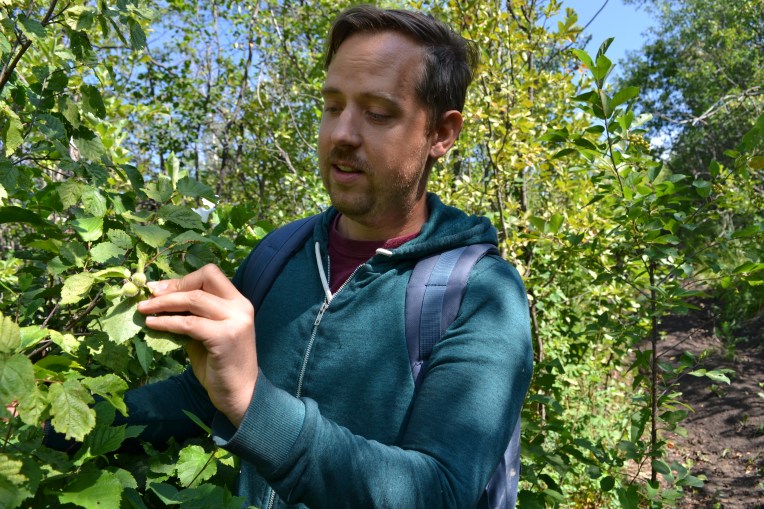
Dustin holds up a leaf, with many trees behind him
Dustin at the Coates Conservation Area, not far outside Edmonton city limits. We headed there to get a picture of what an undisturbed or old growth area here might look like.

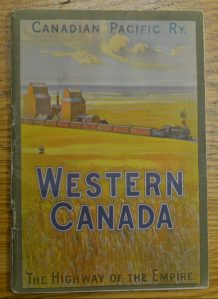
A guide entitled "Western Canada" produced by Canadian Pacific Railways
We went to the Bruce Peel Special Collections at the University of Alberta to examine old pamphlets and magazines produced by railways and the Canadian government, enticing settlers out West.

When I first read his question, it made my brain spin. In school we were taught that this region is part of the Aspen parkland biome – a mix of grasslands and deciduous forests. But you do see Edmonton businesses and artists taking on the “prairie” label all the time. So how far back does that reputation go?

Figuring out the answer was incredibly complicated. We found seemingly contradictory answers from old newspaper editorials, advertising materials aimed at prospective settlers, a local land conservation organization, and traditional Indigenous knowledge keepers. To parse it all, we ended up paying close attention to how far out we were zooming with our historical lens. What matters most? The last 50 years? 200? 10 000?

I’m proud of the nuance and struggle in this episode. It feels authentic to the process of answering any good historical question. There tend to be a lot of caveats and assumptions we need to examine.

Also any episode where I get to go hiking and learn some new words is a treat.

Shareables levels up

So it’s been a long time since I’ve written about Shareable Neighbourhood, and it’s grown a lot over the last year. As you might know, it’s the little volunteer-run community group I started back in 2012 to get people sharing knowledge about local history, nature, and culture in Edmonton’s Old Strathcona/Mill Creek area. When it started, we were leading backyard garden tours, foraging walks through Mill Creek Ravine, hosting local filmmaker showcases, that kind of thing. But the plan has always been to “level up” everyone participating, by taking on projects together.

I’d say we’ve definitely achieved that this summer.

Some of the hard-working Shareable Neighbourhood volunteers
Some of the hard-working Shareable Neighbourhood volunteers working on our summer greening project

With the support of the City of Edmonton and the Rotary Club of Edmonton Whyte Avenue, we came up with a Greening Project to get rain barrels and composters out to more people in the neighbourhood, for very cheap ($20). We created workshops on composting and rain barrel basics for the participants since most of them were newbies, and got tools they could borrow to install everything themselves. In exchange, they’ll be sharing what they learned on one of our public tours, and putting up signs announcing that they’ve become a Mulch Master or a Water Warrior.

It’s been tremendous fun so far. Putting together a grant proposal, making distribution maps, finding suppliers, and getting reimbursement cheques hasn’t exactly been riveting. But seeing the look on people’s faces when they finally get their big honking new composter is so satisfying. Today Finn and I led the first rain barrel workshop, and it felt so good to live the Shareable Neighbourhood spirit of being a proud non-expert, and still sharing what we know and helping other people feel more confident installing one themselves.

Next month, we’ll be doing the public tours, and then at the end of the summer we’ll host the last part of our project: building a living wall together in the Roots on Whyte community building together with Axis Mundi. We’d love for you to take part. It’s such an honour to be in the company of a group of volunteers and community members who care so passionately about this place, and want to make it better.