On the advice of my mentor, I am sharing more small updates about what I’m working on. In the past couple of weeks, my thoughts and stories have been with a remarkably caring family on the streets, and with a bird desperately in need of friends in Alberta.
My story for the CJSR Homelessness Marathon was quite a challenge to put together. I can’t remember ever before spending a whole afternoon recording hours of tape, then whittling it down to a 20-minute mini-doc for radio. In this case, we had many months of time to prepare for the national marathon of community radio programming about homelessness in Canada. I used some of that time to get to know the people on the Boyle Street Community Services winter outreach van, which roams all over the city offering people a chance to warm up, get some hot food and supplies, and share the company of people who care about them. I discovered that it isn’t just people on the streets who benefit from this van’s work, though. Together with the staff, they make a caring family that feels it deeply when one of their own is lost:
This week on Terra Informa, my friend Danielle Dolgoy and I chased down a story about one of Alberta’s most threatened species. University of Alberta researcher Mark Boyce estimates that over the past few decades, the number of greater sage-grouse in the province has dipped from the thousands to a few dozen. There are so many reasons this is happening – oil and gas development, farming pressures, hawk predation… millions of reasons why the federal government sat on the sidelines for so long before issuing a special protection order under the Species At Risk Act to dramatically protect the bird. We were curious to know what finally motivated some of the parties involved to see what’s in it for them to protect the greater sage-grouse:
I’m headed to Iceland soon, and will be back near the end of March with some good stories about the archetypal land of Ice and Fire.
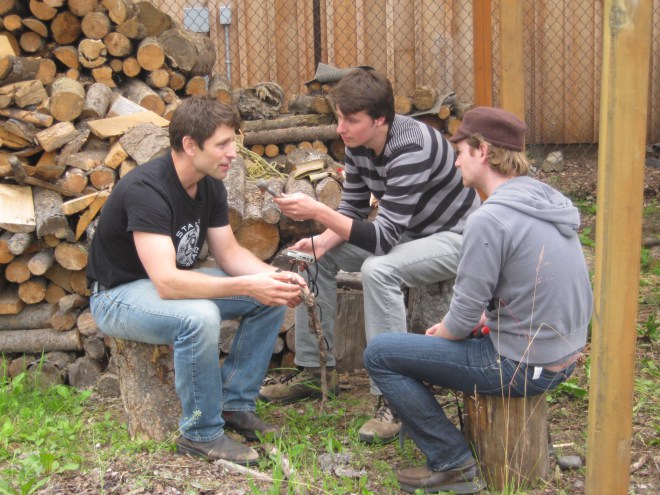
David Kaczan and Marcus Peterson (middle and right) were two of the Terra Informers who journeyed out to capture voices of locals along the Northern Gateway project route.
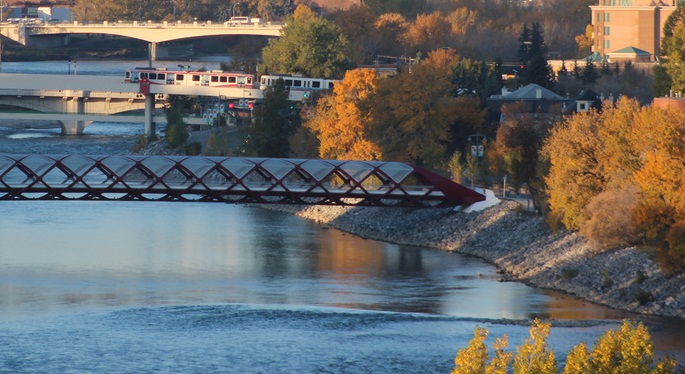
Every time I go to Calgary recently, people ask me what I think about the red skeletal swoops of the new Peace Bridge. I don’t have strong feelings about the bridge itself, but I was reminded of its pedestrian crossings this week when the Joint Review Panel decided to recommend building the Northern Gateway pipeline project.
Two years ago, I remember debating the objectivity of the Joint Review Panel process assessing the proposal to chug Alberta’s bitumen out to Kitimat. In early 2012, Terra Informa released a two-part radio documentary called Rough Waters & Divide Valleys: Voices from the Northern Gateway Pipeline. We sent a team of independent radio journalists out from Edmonton in the summer of 2011, and they travelled the route of the proposed pipeline, having conversations with locals along the way. I remember being surprised to hear how widely opinions diverged, especially in towns like Prince George where some talked about fearing for their forests, and others spoke plainly about hoping the pipeline would bring jobs to town.
It’s easy to see how this led to two main reactions among opponents of the project when the panel released their final conclusion that the proposal’s benefits outweigh its risks: complete apathy, and anger. This is where I’m reminded of Calgary’s Peace Bridge.
Say what you will about the aesthetics of the pedestrian crossing, or its cost, or how close it is to other bridges crossing the Bow River downtown (and Calgarians have said a lot about those things). What struck me when I first visited it is that when you cross over to its north side, you’re dropped off right onto Memorial Drive, with no obvious way to cross the four lanes of busy traffic to get to your destination. I watched for a while to see how other pedestrians reacted.
My whole family assumes that I love the long red Peace Bridge, for some reason. (Photo: daveblogs007)
Most people looked earnestly for a safe place to cross, or a button to press. Then they saw how far away those were, and did the logical thing: they jay-walked. At no small peril to their lives, I might add!
It demonstrates a basic principle I heard outlined by a guest on CBC’s The House a while back: when people believe they have meaningful, fair choices, they’ll go along with one of them. When they feel like the choices are unfair, they’ll either act out or opt out. If you need to cross the street and the nearest crosswalk is unreasonably far away from your path, it’s understandable to act out and jog across the road. Not safe, but understandable.
This is why you’re not likely to see many opponents shrugging their shoulders and saying, “Well, we did what we could.” BC First Nations, community activists, and environmental groups are gearing up for a fight if the Federal Government ends up approving the pipeline next year. When the game looks rigged, reasonable people will likely make the choice to act out or opt out.
If this thesis is right though, it offers hope to those fighting for genuinely participatory decision-making. When we see that our choices are meaningful, we’re more likely to jump in and help make them. That is something worth fighting for.
I was talking to somebody about this blog the other day, and I mentioned its mandate to tell stories that highlight the hope and groundwork we need to make a more just, sustainable world we can revel in. She was totally taken aback, and pointed out that the material often seems really heavy and serious. Fair point! What I have to share right now certainly fits that bill. I have something with a little more joy and beauty to share soon too, though.
So a couple of months ago, my friend Ashley Fairall (one of the Next Up crowd) invited me to contribute to a video responding to Men’s Rights Edmonton‘s moment in the spotlight this year. It’s been a bit of a call-and-response year in Edmonton. First, an advocacy organization called SAVE (Sexual Assault Victims of Edmonton) released a series of posters telling men considering sexual assault, “Don’t be that guy.” Men’s Rights Edmonton responded with posters that suggested men are being unfairly singled out for blame in this problem. The posters looked almost identical, but the second one said “Don’t be that girl.” As in, the girl who accuses someone of rape because she decides in the morning the sex wasn’t great.
First of all, false accusations are incredibly rare, especially given the amount of harassment and stigma rape victims suffer for approaching the police at all. Second, I’m really disheartened by the feeling of victimization among some men in my community when “rape culture” is discussed. The term refers to the strong currents of our culture that suggest that men can’t help themselves from attacking women when they’re turned on by the sight of a sports bra, and that women should take the brunt of responsibility for rape if they want to wear short skirts or walk home alone at night. I’m tired of it. I want men to step up and own this problem. Let’s be accountable for the fact that we benefit from that culture, and it’s up to us to change it.
That’s what I said in this compilation of responses to the “A Voice for Men” movement behind actions like the “Don’t be that girl” posters. It’s gotten some attention on the Huffington Post, and I think it’s worth watching. Please check it out, and share and discuss with the men in your life.
 Chris Chang-Yen Phillips: Storyteller and People Weaver